

Table of Contents
- Why Tire Tread Depth Matters for Your Safety
- How Low Tread Affects Traction, Braking, and Handling
- How to Check Tire Tread Depth at Home
- Understanding Minimum Tire Tread Depth Requirements
- Tire Tread Depth Chart and Measurement Ranges
- When to Replace Tires: Beyond the Legal Minimum
- What to Do If You Discover Your Tread Is Too Low
- Frequently Asked Questions
Last Updated: October 21, 2026
Why Tire Tread Depth Matters for Your Safety
Your tires are literally where the rubber meets the road.
Tread is the grooved rubber on your tire’s surface. Those grooves aren’t just there for looks. They channel water away from the tire and help your vehicle grip the road in all conditions. When tread wears down, those channels get shallower. Eventually, they disappear entirely.
At 208 Tire & Auto Shop, we’ve talked with countless drivers who didn’t realize how dangerous worn tires had become until something went wrong. A sudden loss of traction on wet pavement. A blowout on the highway. A skid they barely recovered from.
Think of tread depth like the tread on a staircase. New stairs have deep grooves. You can grip them easily. After years of use, those grooves wear smooth. Suddenly, the stairs become slippery and dangerous. Your tires work the same way.
Most drivers don’t check their tread until something scary happens. The best time to check is during routine maintenance, the same visit where we rotate your tires or check your brakes.
How Low Tread Affects Traction, Braking, and Handling
When tire tread depth is too low, three critical things happen to how your vehicle performs.
First, traction suffers. Traction is your tire’s grip on the road. Deep tread channels water and snow away from the contact patch. Shallow tread can’t do this effectively. Your tire loses grip, especially on wet or slippery surfaces.
Second, braking distance increases. Your vehicle takes longer to stop. On a wet road with worn tires, you might not stop in time to avoid a collision.
Third, handling becomes unpredictable. Steering feels less responsive. Your vehicle might drift or slide when turning, especially at highway speeds or in poor conditions.
These three factors work together. Low tread doesn’t just make driving slightly riskier. It fundamentally changes how your vehicle behaves.
Wet-Road Performance and Hydroplaning Risk
Wet roads are where low tread becomes truly dangerous. Water sits on the road surface. If your tread is deep enough, it channels that water to the sides. If your tread is shallow, water can’t escape fast enough.
When water sits between your tire and the road, hydroplaning occurs. Your tire floats on top of the water instead of gripping the pavement. You lose steering control completely. Your brakes won’t work. It’s one of the scariest feelings a driver can experience.
Hydroplaning can happen at speeds you might think are safe. It depends on how much water is on the road, how fast you’re going, and how shallow your tread is. The shallower your tread, the slower you need to go to avoid hydroplaning. With extremely worn tires, even moderate speeds become risky in heavy rain.
If you hydroplane, don’t brake hard or jerk the steering wheel. Ease off the accelerator and steer gently until you feel the tires grip again. But the best approach is to never let your tread get that low in the first place.
Stopping Distance and Braking Performance
Your brakes are only as good as your tires. Even the best brake system can’t stop a vehicle if the tires can’t grip the road.
On dry pavement, low tread affects braking distance, but not dramatically. On wet pavement, the difference is severe. A vehicle with good tread stops significantly faster than one with worn tires.
Imagine you’re driving at 55 miles per hour on a wet road and a child runs into the street. With good tread, you might stop in time. With worn tires, you won’t. The extra stopping distance might be just 10 or 15 feet, but that’s often the difference between a close call and a tragedy.
This is why we take tread depth seriously at 208 Tire & Auto Shop. We don’t just measure it. We help you understand what it means for your specific driving situation.
Snow and Winter Driving Challenges
Winter driving demands even more from your tires. Snow is slippery. Ice is slipperier. Your tires need deep tread to bite through snow and maintain traction.
Worn tires in snow are a recipe for getting stuck. You’ll spin your wheels without moving forward. You’ll slide on hills. You’ll struggle to maintain control on curves.
Many drivers don’t realize that all-season tires with low tread are nearly useless in snow. Deep tread on an all-season tire works reasonably well in winter. Shallow tread on any tire, including winter tires, becomes risky.
If you live somewhere with regular snow, check your tread before winter arrives. Don’t wait until you’re already struggling in a snowstorm.
How to Check Tire Tread Depth at Home
You don’t need special equipment to check your tread. You can do it in your driveway with a penny.
The Penny Test Method
The penny test is simple and quick. Take a penny and hold it with Lincoln’s head facing down. Insert the penny into a tread groove on your tire.
If the top of Lincoln’s head disappears into the tread, your tread is still reasonably deep. If you can see the top of Lincoln’s head, your tread is getting low.
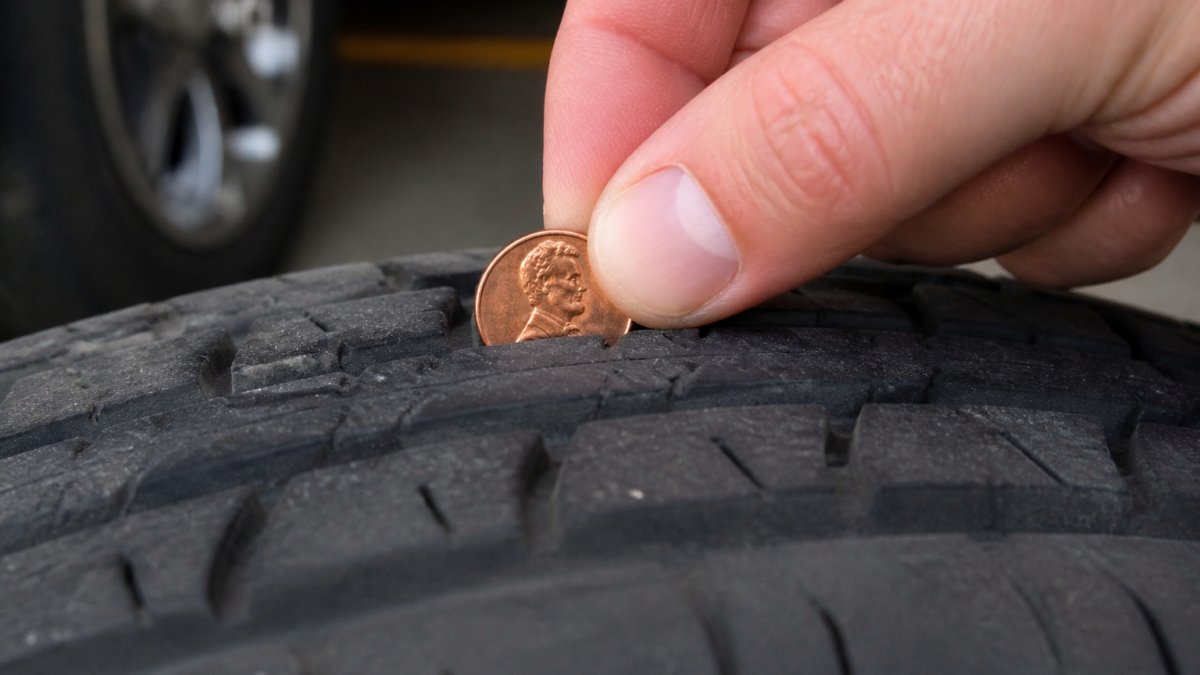
Check multiple spots around each tire. Tread doesn’t always wear evenly. One area might be fine while another is worn thin. Check the inside, outside, and middle of each tire.
The penny test isn’t perfectly precise, but it’s reliable enough for a quick check. If you’re unsure about your results, bring your vehicle to 208 Tire & Auto Shop for a professional measurement.
The penny test takes 30 seconds per tire. It’s the easiest way to know if your tread is getting dangerously low.
Using a Tread-Depth Gauge
A tread-depth gauge is a small tool that measures tread depth precisely. You can buy one at any auto parts store for just a few dollars.
Press the gauge into a tread groove. The needle or digital display shows the depth in 32nds of an inch. Most gauges measure up to 10/32 inch or deeper.
Use the same spots you checked with the penny test. Compare measurements across the tire. If one spot is significantly lower than others, uneven wear is happening. This might indicate alignment issues or underinflation.
A professional measurement is more accurate than the penny test. If you want to know your exact tread depth, a gauge gives you that information. Many tire shops, including 208 Tire & Auto Shop, will measure your tread for free.
Understanding Minimum Tire Tread Depth Requirements
The legal minimum tire tread depth in most places is 2/32 inch. This is the point where tires are considered bald and illegal to use on public roads.
However, legal minimum and safe minimum are two different things. Just because your tread is above 2/32 inch doesn’t mean your tires are safe.
Many safety experts recommend replacing tires at 4/32 inch (pubmed.ncbi.nlm.nih.gov). At this depth, wet-road traction begins to degrade noticeably. Hydroplaning risk increases. Braking distance on wet pavement gets longer.
The difference between 4/32 and 2/32 might seem small, but it represents a significant drop in safety. Those extra 2/32 inches of tread make a real difference in how your vehicle performs when conditions get wet or slippery.
Think of it this way: the legal minimum is the point where tires become unsafe for normal driving. The recommended replacement point is where tires start losing the safety margin you need for unexpected situations.
Tire Tread Depth Chart and Measurement Ranges
Here’s a quick reference for understanding what different tread depths mean:
| Tread Depth | Condition | Safety Status | Recommendation |
|---|---|---|---|
| 10/32 inch or deeper | New or nearly new | Excellent | Normal driving |
| 6/32 to 9/32 inch | Good condition | Good | Continue monitoring |
| 4/32 to 5/32 inch | Moderate wear | Fair | Consider replacement soon |
| 2/32 to 3/32 inch | Severe wear | Poor | Replace immediately |
| Below 2/32 inch | Bald | Illegal | Do not drive |
New tires typically have 10/32 to 11/32 inch of tread. Most drivers replace them somewhere between 4/32 and 6/32 inch, depending on their driving conditions and safety preferences.
If you drive mostly on highways in dry conditions, you might push closer to 4/32 inch. If you drive in rain, snow, or heavy traffic, replacing at 6/32 inch makes sense. The safer you want to be, the higher you should set your replacement threshold.
When to Replace Tires: Beyond the Legal Minimum
Knowing when to replace tires requires thinking beyond just the legal minimum. You need to consider your driving conditions, your vehicle type, and your safety priorities.
Highway driving in dry conditions is forgiving. Tires can perform reasonably well at 4/32 inch. City driving with frequent braking is harder on tires. Rain and snow make everything more demanding.
If you have a family in your vehicle, you might want to replace tires sooner. If you drive alone on short trips, you might stretch them longer. Neither choice is wrong. It depends on your risk tolerance.
One thing is certain: don’t wait until you’re in a dangerous situation. Don’t drive through a rainstorm thinking, “I hope my tires hold up.” Check your tread before the season changes. Replace tires before conditions get challenging.
At 208 Tire & Auto Shop, we help customers make this decision based on their specific situation. We don’t push unnecessary replacements.
Drivers who want to stay safe in all weather conditions should replace tires at 6/32 inch or higher. Drivers in dry climates might stretch to 4/32 inch. Drivers in rain or snow should never go below 6/32 inch.
What to Do If You Discover Your Tread Is Too Low
If you check your tread and find it’s dangerously low, here’s what to do.
First, don’t panic. You’re not in immediate danger if you’re careful. But you do need to act soon.
Second, limit your driving. Avoid highways if possible. Avoid heavy rain or snow. Drive at moderate speeds. Give yourself extra following distance behind other vehicles.
Third, get your tires replaced as soon as possible. Don’t put this off. Don’t assume you can make it another week or two.
If you need new tires, 208 Tire & Auto Shop can help. We carry top-brand tires at competitive prices. Our ASE-certified technicians will mount and balance them properly.
We also offer flexible financing options. If cost is a concern, we can work with you to make new tires affordable. Your safety, and your neighbors’ safety, is worth the investment.
Low tire tread depth isn’t something to ignore or hope goes away. It’s a safety issue that demands attention.
Frequently Asked Questions
What happens if you drive with low tire tread?
Low tire tread depth reduces your grip on the road, especially in wet conditions. Your stopping distance increases, steering control weakens, and you face a much higher risk of hydroplaning on wet surfaces. In winter, worn tires lose even more traction on snow and ice. Over time, worn tires generate excess heat, which can lead to blowouts or sudden tire failure while driving, putting you and your passengers at serious risk.
How do I check my tire tread depth at home?
The easiest method is the penny test: insert a penny into the tread groove with Lincoln’s head upside down. If you can see the top of his head, your tread is too low and needs replacement. For a more precise measurement, use an inexpensive tread-depth gauge (available at any auto parts store). Simply press it into the groove until it stops, and read the measurement. Check multiple spots on each tire, as wear is often uneven.
What is the minimum tire tread depth required by law?
Federal law sets the minimum legal tire tread depth at 2/32 of an inch. However, many safety experts recommend replacing tires at 4/32 of an inch, especially if you frequently drive in rain or snow. At 2/32, your tires are barely safe and your braking distance increases significantly. Our team at 208 Tire & Auto Shop can help you understand what tread depth is right for your driving conditions and vehicle.
Can worn tires cause hydroplaning?
Yes. Tire tread channels water away from the tire surface. When tread wears down, those channels become shallower, and your tires lose their ability to displace water. This allows a thin layer of water to build between the tire and the road, causing hydroplaning, where your tires lose contact with the pavement entirely. Even at moderate speeds on wet roads, worn tires dramatically increase hydroplaning risk. Maintaining adequate tread depth is one of the best ways to stay safe in rain.

