

Table of Contents
- What Makes Brake Pads Suitable for Heavy Duty Trucks
- Ceramic vs Semi-Metallic Brake Pads for Towing
- Signs of Worn Brake Pads on Heavy Duty Vehicles
- Heavy Duty Brake Pad Break-In Procedure
- Rotor Compatibility and Brake System Performance
- Brake Fade and Heat Dissipation Under Severe Duty
- Fleet Maintenance and Total Cost of Ownership
- Frequently Asked Questions
Last Updated: October 7, 2026
What Makes Brake Pads Suitable for Heavy Duty Trucks
Selecting the right brake pads heavy duty trucks means understanding how friction materials perform under extreme stress. Heavy duty applications demand pads that withstand sustained heat, repeated heavy braking, and loaded payloads. At 208 Tire & Auto Shop, we help truck owners navigate these choices.
Friction coefficient directly impacts stopping distance and braking torque. Heavy duty pads maintain consistent performance across a wider temperature range than passenger vehicle pads, critical when descending mountain grades or towing over long distances.
Brake fade, the temporary loss of braking power when friction materials overheat, is one of the most dangerous failure modes in heavy duty trucking. Quality heavy duty brake pads resist fade through advanced formulations and superior heat dissipation. Rotor compatibility also matters; mismatched pads and rotors reduce clamping force and accelerate wear on both.
Ceramic vs Semi-Metallic Brake Pads for Towing
Towing puts demands on your brake system that far exceed normal highway driving. Ceramic pads offer lower dust and quieter operation, but semi-metallic pads deliver superior braking torque and heat dissipation for sustained heavy braking.
Semi-metallic formulations contain steel fibers and metallic compounds that raise friction coefficient and thermal conductivity. They excel under severe duty where repeated hard stops generate extreme heat.
Ceramic compounds generate less dust and run quieter, working well for lighter towing and mixed-use trucks. However, they may struggle with sustained heat in severe towing. Low-metallic pads split the difference: better thermal performance than ceramic, less dust than full semi-metallic.
The real decision point is your payload and towing capacity. A truck regularly loaded to near gross vehicle weight rating should use semi-metallic pads.
Signs of Worn Brake Pads on Heavy Duty Vehicles
Worn brake pads on heavy duty vehicles show distinct warning signs.
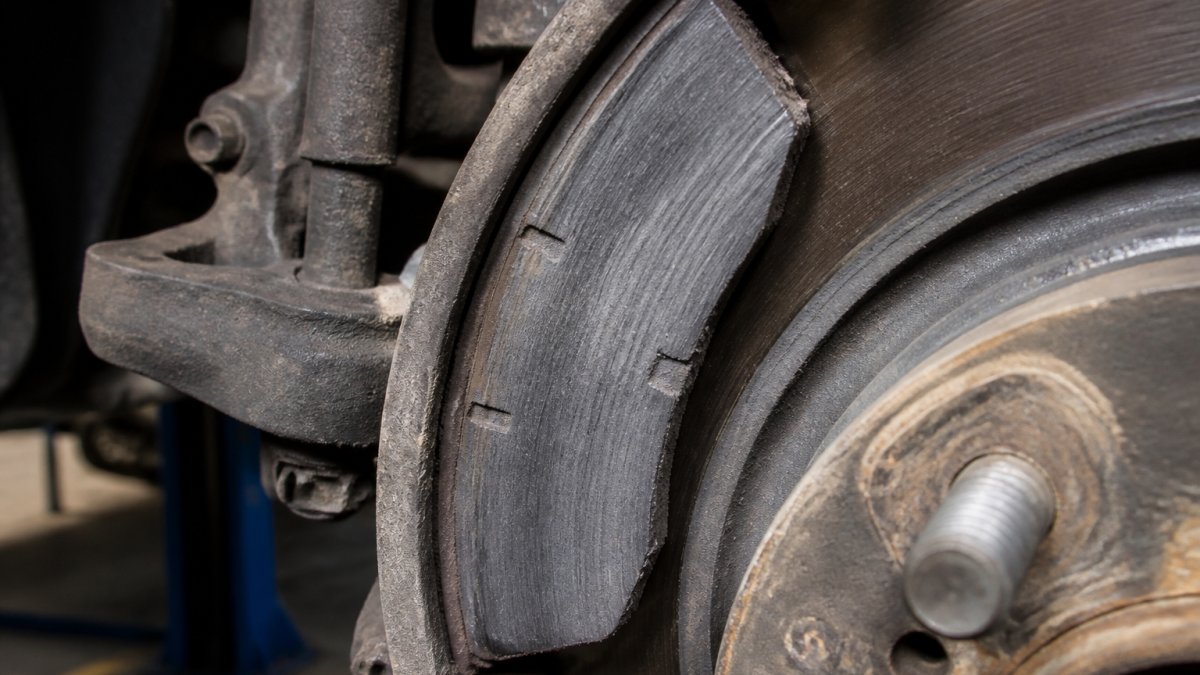
Reduced braking responsiveness is more serious. Longer stopping distances or a “softer” pedal mean pad wear has passed safe limits. Pedal vibration or pulsation often indicates rotor wear alongside pad deterioration.
Visual inspection reveals wear patterns. Most manufacturers recommend replacement when friction material drops below 2-3mm. Uneven wear suggests caliper problems or rotor warping, and dust buildup around wheels indicates accelerated wear from heavy braking.
Heavy Duty Brake Pad Break-In Procedure
Bedding-in transfers a thin, uniform layer of friction material, the transfer layer, not the glaze, onto the rotor face. That layer becomes the working surface your pads grip. Skip it and the pads never develop full friction coefficient, showing up as longer stopping distances, hot spots, and rotor scoring. For a heavy-duty truck, it is the single most controllable factor in pad life.
Why the Transfer Layer Matters More on Heavy-Duty Trucks
A Class 3-5 truck carries two to three times the kinetic energy of a half-ton pickup at the same speed, and that energy converts to heat at the friction interface. A properly bedded transfer layer spreads heat evenly across the rotor face; an improper one concentrates it in patches, causing pedal pulsation, blue hot spots, and pad material smearing onto the rotor.
A Practical Bedding-In Sequence
Protocols vary by manufacturer, so check the card in the box first. A common pattern that works across most semi-metallic and low-metallic heavy-duty formulations:
- Verify the install. Clean rotor faces with brake cleaner, confirm caliper slide pins move freely, and torque lug nuts to spec. Contaminated or sticking hardware ruins bedding regardless of the stop sequence.
- Find an empty road. You need a stretch where you can accelerate to roughly 40-50 mph and stop without traffic behind you.
- Perform 6-10 moderate stops from about 40 mph down to 10 mph with firm but not panic-level pressure. Do not stop completely, rolling through the last few mph prevents uneven pad deposits on the rotor.
- Cool between cycles. Drive for 2-3 minutes at highway speed without braking to let airflow pull heat out of the rotors. Skipping the cool-down is the most common mistake.
- Repeat the cycle two to three times, then park and let the brakes cool completely before evaluating pedal feel.
Never hold the truck stationary with your foot on the brake immediately after a hard stop during bedding-in. That traps hot pad material against one spot on the rotor and creates a permanent thickness variation, the root cause of most pulsation complaints after a fresh brake job.
What to Expect After Bedding-In
Once the transfer layer is established, friction coefficient stabilizes and pedal feel firms up. Full chemical cure of the pad binder continues over the first few hundred miles, so avoid towing at maximum gross vehicle weight rating or repeated mountain descents until then. Fleet shops often log the first 500 miles as ‘light duty’ on the service ticket so drivers don’t hammer the brakes.
When Bedding-In Goes Wrong
Pulsation, a sharp burning odor that won’t fade, or a visible ring of dark material smeared on the rotor face means the transfer layer is uneven. Usually you can re-bed by repeating the stop-and-cool cycle. If pulsation persists after a second attempt, the rotor likely has thickness variation or hard spots and should be measured with a micrometer against the manufacturer’s minimum thickness spec before you spend more time on the pads.
Bedding-in is not a formality. Done correctly, it sets the friction coefficient, prevents hot-spot pulsation, and is the cheapest insurance you can buy against premature pad and rotor replacement on a heavy-duty truck.
Rotor Compatibility and Brake System Performance
Rotor compatibility is not just matching a part number. It means matching the rotor’s thermal mass, surface finish, and thickness to the pad’s friction characteristics, and to the actual rolling mass your truck is stopping. Get it wrong and even premium pads underperform.
The Three Compatibility Dimensions That Actually Matter
1. Thermal mass. A heavier, thicker rotor absorbs more heat before its surface temperature reaches the fade range. Cast iron remains standard for heavy-duty use because its thermal conductivity and heat capacity are well understood and it resists warping under repeated heat cycles.
2. Surface finish and preparation. New rotors ship with a non-directional finish that helps the pad lay down its transfer layer. Reused rotors must be measured for thickness, checked for parallelism, and deglazed before new pads go on.
3. Pad-to-rotor friction match. Semi-metallic and low-metallic pads are formulated to work against specific rotor metallurgy. Putting an aggressive semi-metallic pad on a rotor that was designed for a ceramic pad can cause rapid rotor wear, noise, and inconsistent pedal feel.
How Oversized Tires Change the Braking Equation
Most brake pad guides skip this, yet it’s the question heavy-duty owners ask most after a lift or tire upgrade. A larger diameter tire increases the rolling radius, which does two things at once:
- It reduces the mechanical advantage of the brake system. The brake caliper has to apply more torque at the rotor to produce the same deceleration at the tire contact patch. A modest tire diameter increase can translate into a noticeable increase in stopping distance if nothing else changes.
- It adds unsprung and rotating mass. A heavier wheel and tire package takes more energy to slow down, and that energy converts to heat in the pads and rotors. The brake system that was adequate at stock tire size may now be operating near its thermal limit on a long descent.
If you have upsized tires: step up to a pad with a higher friction coefficient (typically semi-metallic or severe-duty), confirm rotors are at or above minimum thickness, and consider a big-brake or upgraded-rotor kit if you tow heavy loads regularly. Do not assume the factory pad spec still applies.
A Simple Compatibility Checklist Before You Buy
- Confirm the pad part number is listed for your truck’s gross vehicle weight rating and axle configuration, not just the model year.
- Measure rotor thickness and compare to the minimum stamped on the rotor hat or in the service manual.
- Check caliper slide pins and boots, a sticking caliper mimics a pad problem and will destroy a new set of pads in short order.
- If you have changed tire diameter, note the change and factor it into your pad selection.
- Bed the new pads in properly (see the break-in section above) before judging their performance.
Keep the receipt and the pad box card. If a pad fails early, most manufacturers want the batch number and the bedding-in procedure you followed before they will consider a warranty claim.
Rotor compatibility is a system question, not a parts question. Match thermal mass, surface condition, and friction characteristics to your actual load and tire size, and treat any tire diameter change as a trigger to re-evaluate the whole brake package.
Brake Fade and Heat Dissipation Under Severe Duty
Brake fade occurs when friction materials lose effectiveness due to extreme heat buildup. Understanding heat dissipation helps prevent this dangerous condition during heavy towing or mountain driving.
Sustained braking generates temperatures exceeding 600°F in severe duty. At these temperatures, the friction coefficient of inferior brake pads drops significantly, and the loss of braking power can occur suddenly and without warning.
Heat dissipation depends on rotor design, pad material, and cooling airflow. Larger rotors with more surface area dissipate heat faster, and ventilated rotors with internal cooling passages outperform solid rotors in severe duty.
Environmental factors influence heat buildup. Long descents with continuous braking generate sustained heat that exceeds standard braking systems’ capacity, and towing heavy loads amplifies the stress. Dusty or sandy conditions can clog cooling passages and reduce heat dissipation.
Fleet Maintenance and Total Cost of Ownership
Total cost of ownership for brake systems extends beyond pad purchase price. Fleet maintenance strategies that prioritize regular inspections and timely replacement reduce emergency downtime and extend system lifespan.
Preventive maintenance costs less than reactive repairs. Inspection intervals, typically every 50,000 miles for heavy duty trucks, catch wear before catastrophic failure.
Brake pad quality directly impacts fleet economics. Premium pads engineered for heavy duty service last longer and maintain performance consistency, reducing replacement frequency.
Documenting brake service history helps fleet managers track performance patterns and plan replacement schedules.
Downtime costs often exceed parts and labor combined. A truck out of service for brake work loses revenue-generating capacity.
Choosing the right brake pads heavy duty trucks requires balancing friction material type, thermal performance, and your specific application.
Frequently Asked Questions
What are the best brake pads for heavy-duty trucks?
The best brake pads for heavy-duty trucks depend on your specific use. Semi-metallic pads excel in towing and payload scenarios because they handle sustained heat and offer strong clamping force. Ceramic pads work well for general-duty trucks with moderate towing, providing quieter operation and less dust. Verify rotor compatibility and gross vehicle weight rating before purchasing to ensure your braking system can handle your truck’s load.
Are ceramic or semi-metallic brake pads better for heavy-duty trucks?
Semi-metallic brake pads generally outperform ceramic for heavy-duty trucks, especially those towing trailers or carrying heavy payloads. Semi-metallic materials generate higher friction coefficient and better thermal stability under sustained braking, reducing brake fade on long descents. Ceramic pads fade faster under extreme heat but produce less dust and noise. Choose semi-metallic for towing capacity demands; ceramic works for lighter-duty applications. Always match pad choice to your truck’s braking torque requirements and intended use.
How often should you replace brake pads on a heavy-duty truck?
Heavy-duty truck brake pads typically need replacement every 25,000 to 70,000 miles, depending on driving conditions and friction material type. Severe-duty applications like frequent towing, mountain driving, or oversized tires reduce pad life significantly. Monitor wear indicators and listen for squealing sounds. Inspect rotors for wear during replacement; worn rotors compromise braking performance and shorten new pad life. Fleet maintenance schedules should include regular brake inspections every 10,000 to 15,000 miles to catch wear early and prevent costly rotor damage.
Do heavy-duty brake pads require a break-in period?
Yes, heavy-duty brake pads require a proper bedding-in procedure to achieve full friction coefficient and thermal stability. Perform gentle braking from 30 mph to a stop, repeat 5-10 times without overheating the system. Allow pads to cool, then repeat with slightly harder braking from 45 mph. Avoid heavy towing or severe braking for the first 50-100 miles. Proper break-in prevents brake fade, reduces noise, and extends pad life. Skipping this procedure can result in poor stopping distance and premature rotor wear.

