

Table of Contents
- Why Hidden Auto Repair Fees Happen
- Understanding Your Auto Repair Estimate
- What You Need to Know About Car Diagnostic Fees
- Questions to Ask a Mechanic Before Work Begins
- Common Hidden Costs and How to Question Them
- How to Dispute an Auto Repair Bill
- Your Rights as a Vehicle Owner
- Conclusion
- Frequently Asked Questions
Last Updated: October 9, 2026
Why Hidden Auto Repair Fees Happen
Mechanics add unexpected charges because they find problems during the work that weren’t visible in the initial inspection, a failing belt, rust on brake components, or dark transmission fluid.
This happens constantly. The mechanic isn’t trying to deceive you. But you’re still blindsided by a bill that’s $200 or $500 higher than the estimate.
The gap between estimate and final bill creates tension: authorize the extra work or risk driving an unsafe vehicle? The shop has leverage because you’re already there and your car is in pieces.
At 208 Tire & Auto Shop, we believe transparency prevents this problem. When our ASE-certified technicians discover something unexpected, we contact you first, explain what we found, and give you options.
Understanding why these fees exist helps you prepare for them and spot when a shop is dishonest versus genuinely fixing a real issue.
Understanding Your Auto Repair Estimate
A repair estimate is a written prediction of what the work will cost, covering parts, labor, and diagnostic fees. It’s NOT a guarantee, just an educated guess based on what the technician can see without tearing into the vehicle.
Here’s what a solid estimate should contain:
- A description of the work being done
- The parts needed and their cost
- Labor hours and the hourly rate
- Any diagnostic fees
- An explanation of what’s included and what’s not
- A note about potential additional charges if problems are found during the work
The estimate protects both you and the shop: it sets expectations, gives you a number to compare against other shops, and documents what you authorized.
Many shops provide free estimates; others charge a diagnostic fee that’s applied to the repair cost if you move forward. Ask about this upfront, since some shops waive the fee and others don’t.
Read the estimate carefully and ask about anything you don’t understand. If it says “repair transmission” without specifics, ask for details, you need to know what you’re paying for before you say yes.
What You Need to Know About Car Diagnostic Fees
A diagnostic fee is what the shop charges to figure out what’s wrong with your vehicle, the technician connects your car to a computer, runs tests, and identifies the problem.
Diagnostic fees depend on complexity; a transmission or electrical issue costs more to diagnose than a simple brake inspection.
Ask whether the diagnostic fee will be applied to your repair bill if you authorize the work. Many shops do this automatically, some don’t, get it in writing before they start.
If a shop refuses to credit the diagnostic fee toward the repair, consider a second opinion, reputable shops build trust by crediting it.
Don’t confuse a diagnostic fee with a repair estimate: the fee is for figuring out the problem, the estimate for fixing it. If you pay $100 for diagnostics and decline the repair, that $100 is gone unless you authorize the work.
Ask the shop directly: “If I authorize the repair, will you credit the diagnostic fee toward my final bill?” Get a clear yes or no, and if yes, have them note it on the estimate.
Questions to Ask a Mechanic Before Work Begins
Before you authorize any work, get answers to these questions to protect yourself from surprise charges.
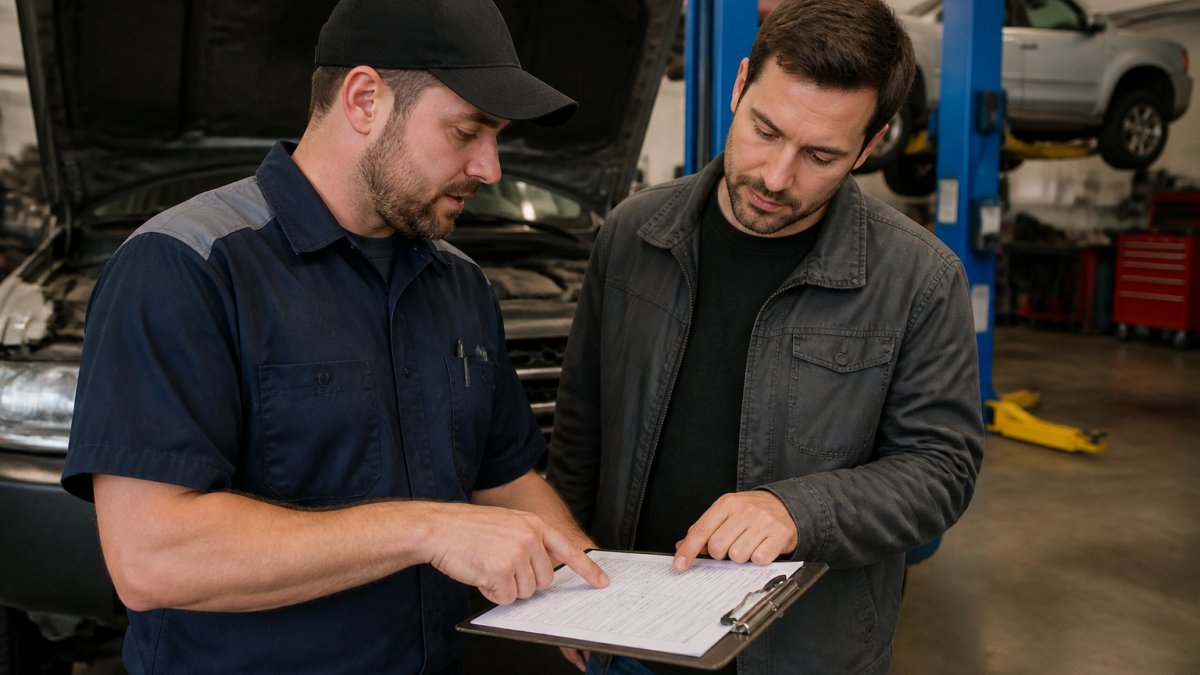
Ask these questions:
-
What exactly are you fixing? Don’t accept vague answers. Ask: “Are you replacing brake pads, rotors, calipers, or all three? Why does each component need replacement?”
-
What parts are you using? Ask whether they’re OEM (made by your vehicle’s manufacturer) or aftermarket (made by third parties, usually cheaper). Know which you’re getting.
-
How long will the work take? Get a time estimate and ask if they’ll call if it runs long, a two-hour job that takes four means additional labor charges.
-
Will you call me if you find additional problems? This is critical, a good shop calls before doing any work not on the estimate, describes what it found, and gets your approval before charging.
-
What happens if I say no to additional work? Ask directly: if you decline a repair, will they still charge for diagnostics, and will they reassemble your vehicle safely?
-
What’s your labor rate? Rates vary widely. Know what you’re agreeing to.
-
Do you guarantee the work? Ask about the warranty on parts and labor, how long it lasts, what it covers, and what it doesn’t. Get it in writing.
-
Can I get a second opinion? If the estimate is high or you’re unsure, ask if you can take your vehicle elsewhere. A confident, honest shop will say yes.
Write down the answers. Ask the shop to put the key points in writing on the estimate. This creates a record if there’s a dispute later.
Common Hidden Costs and How to Question Them
Shops add charges that aren’t obvious. Knowing what to look for helps you spot them before you’re surprised.
Disposal fees. When a shop removes old parts, a transmission, an engine, batteries, they charge you to dispose of them properly. This is legitimate. Proper disposal costs money. But ask how much before they start.
Shop supplies. Some shops charge for rags, lubricants, or sealants used during the repair. This is often bundled into the labor cost. If you see it as a separate line item, question it.
Fluid flushes. A shop might recommend flushing your transmission fluid, coolant, or brake fluid. This is maintenance, not a repair. It’s often unnecessary. Ask why they’re recommending it.
Tire rotation. Some shops charge for tire rotation when you bring your car in for other work. You might not have authorized this.
Alignment fees. After brake work or suspension repairs, a shop might recommend a wheel alignment. This is often necessary, but confirm it before they do it. Ask why it’s needed. Ask the cost.
Refrigerant recharge. If your air conditioning isn’t working, a shop will recommend recharging the refrigerant. This costs money. Ask if they’ve diagnosed a leak or if they’re just adding refrigerant.
Cabin air filter replacement. Shops often recommend replacing cabin air filters during routine service. This is usually unnecessary. Your cabin air filter doesn’t need replacing unless it’s clogged.
When you see a charge you didn’t authorize, ask about it immediately. Don’t wait until you get the final bill. Ask during the repair, while you can still make a decision about whether to approve it.
How to Dispute an Auto Repair Bill
You got the bill. It’s higher than the estimate. You didn’t authorize the extra charges. Here’s what to do.
Step 1: Review the itemized bill. Don’t just look at the total. Read every line. Match it against the estimate.
Step 2: Call the shop immediately. Don’t wait. Ask to speak with the manager or the technician who worked on your car. Ask about each charge you don’t recognize.
Step 3: Ask for documentation. Request photos of the problems they found. Ask for diagnostic reports. Ask for part numbers and invoices for the parts they installed.
Step 4: Request an itemized breakdown. If the bill is vague, ask for details. “Labor” isn’t specific enough. Ask how many hours they charged and what work those hours covered.
Step 5: Negotiate. If charges seem unreasonable, ask for a discount. Explain that you didn’t authorize the work. Ask if they’ll reduce the charge or remove it entirely.
Step 6: Get a second opinion. If the shop refuses to negotiate, take your vehicle to another shop. Describe the work that was done. Ask them to review it.
Step 8: Consider small claims court. If the amount is small enough (usually under $5,000), you can sue the shop in small claims court. You don’t need a lawyer.
Don’t pay the bill until you’ve resolved the dispute. Tell the shop you’ll pay once you understand the charges. They can’t hold your vehicle indefinitely to force payment.
Your Rights as a Vehicle Owner
You have legal protections when you take your car to a repair shop. Knowing these rights helps you stand up for yourself.
Right to an estimate. Most states require shops to provide a written estimate before starting work (Auto Repair Basics). The estimate must be accurate.
Right to authorization. A shop cannot perform work you didn’t authorize. If they discover additional problems, they must contact you and get your approval before proceeding.
Right to your vehicle. A shop cannot keep your vehicle hostage to force payment. They can place a mechanic’s lien on your vehicle, which means they have a legal claim to it if you don’t pay.
Right to parts. You have the right to know what parts are being installed. You can request OEM parts instead of aftermarket parts, though you may pay more.
Right to a warranty. Most shops warranty their work for a set period (typically 30 days to one year). The warranty covers defects in the repair.
Right to a second opinion. You can take your vehicle to another shop for a second opinion. A reputable shop will support this. They understand that customers want to feel confident in their repairs.
Right to a safe vehicle. A shop must return your vehicle in safe, working condition. If they perform work that makes your vehicle unsafe, you can refuse payment and report them to your state’s consumer protection agency.
These rights vary slightly by state. Check your state’s consumer protection laws for specifics. Your state’s Attorney General website has information about vehicle repair rights.
Conclusion
Hidden auto repair fees catch vehicle owners off guard because the work happens behind closed doors. You can’t see what the technician finds until they tell you. But you can protect yourself by asking the right questions, reviewing estimates carefully, and working with a shop that values transparency.
At 208 Tire & Auto Shop, we handle this differently. Our ASE-certified technicians contact you before authorizing any work beyond the estimate. We explain what we found. We show you options. We give you control over your repair bill. That’s how we’ve built trust with families and business owners across the Treasure Valley since 2006. When you need honest service and straightforward pricing, Schedule Service with us today.
| Common Hidden Cost | What to Ask | What to Do |
|---|---|---|
| Disposal fees | “How much to dispose of old parts?” | Request itemized breakdown |
| Shop supplies | “Are supplies included in labor?” | Question separate line items |
| Fluid flushes | “Why is this needed for my vehicle?” | Ask if it’s required or optional |
| Tire rotation | “Did I authorize this work?” | Don’t pay for unauthorized service |
| Alignment fees | “Why do I need an alignment?” | Get written approval before work |
| Refrigerant recharge | “Is there a leak or just low?” | Understand the root cause first |
Frequently Asked Questions
What should be included in a written auto repair estimate?
A complete estimate must list the specific parts needed with their cost, labor hours and hourly rate, the total estimated price, and a description of the work to be performed. It should specify whether parts are new, used, or refurbished, and include the shop’s contact information and authorization limits. Ask for this in writing before any work starts, verbal estimates leave no record if charges change.
Should I have to pay a diagnostic fee if I don’t approve the repair?
Many shops charge diagnostic fees to troubleshoot your vehicle’s problem. However, some shops will waive or credit this fee toward the repair if you authorize the work. Always ask upfront whether the diagnostic fee applies if you decline repairs. Get the diagnostic findings in writing so you can take them elsewhere for a second opinion if needed.
Can an auto repair shop charge more than the estimate?
Most states require shops to obtain written authorization before exceeding an estimate by a certain percentage. If additional work is discovered, the shop must contact you and get approval before proceeding. Never sign a blank authorization form. If you’re charged more than agreed, you have the right to dispute the bill and file a complaint with your state’s consumer protection agency.
Is it worth getting a second opinion on a car repair?
Yes, especially for major repairs or when you’re unsure about recommended work. A second opinion costs little and can save you hundreds if the first diagnosis was incorrect or the repairs were unnecessary. Take your written estimate to another trusted shop for review. This is standard practice and most reputable shops welcome it, it builds confidence in their diagnosis.
Federal Trade Commission guidance on auto repair
National Institute for Automotive Service Excellence standards
Consumer Reports guide to car repair estimates and warranties

