

Table of Contents
- What Is ASE Certification and Why It Matters
- How to Verify ASE Certification: The Official Method
- Understanding ASE Blue Seal of Excellence
- Benefits of ASE Certified Auto Repair
- ASE Certification Expiration and Renewal Requirements
- How to Verify a Repair Shop’s ASE Status
- Understanding the Difference: ASE-Certified Technician vs. ASE-Recognized Shop
- Check for the Blue Seal Display
- Ask About Individual Technician Certifications
- Verify Individual Technicians Using the Official Database
- Red Flags: Spotting Expired, Fabricated, or Suspicious Credentials
- What to Do If You Discover a Problem
- Common Verification Mistakes to Avoid
- Frequently Asked Questions
Last Updated: October 4, 2026
What Is ASE Certification and Why It Matters
ASE certification stands for Automotive Service Excellence. It’s a professional credential that proves a mechanic has the knowledge and skills to work on vehicles correctly.
ASE certification is the industry standard that proves a mechanic has rigorous testing, hands-on experience, and commitment to staying current with automotive technology.
At 208 Tire & Auto Shop, our technicians maintain ASE certifications across multiple specialties, and our blue seal signals professionals who’ve proven their expertise through independent testing.
ASE certification is the most recognized credential in the automotive industry, trusted by insurers, manufacturers, and independently verifiable by customers.
How to Verify ASE Certification: The Official Method
The National Institute for Automotive Service Excellence maintains an official database where you can verify anyone’s credentials in seconds, the only reliable way to confirm current certification.
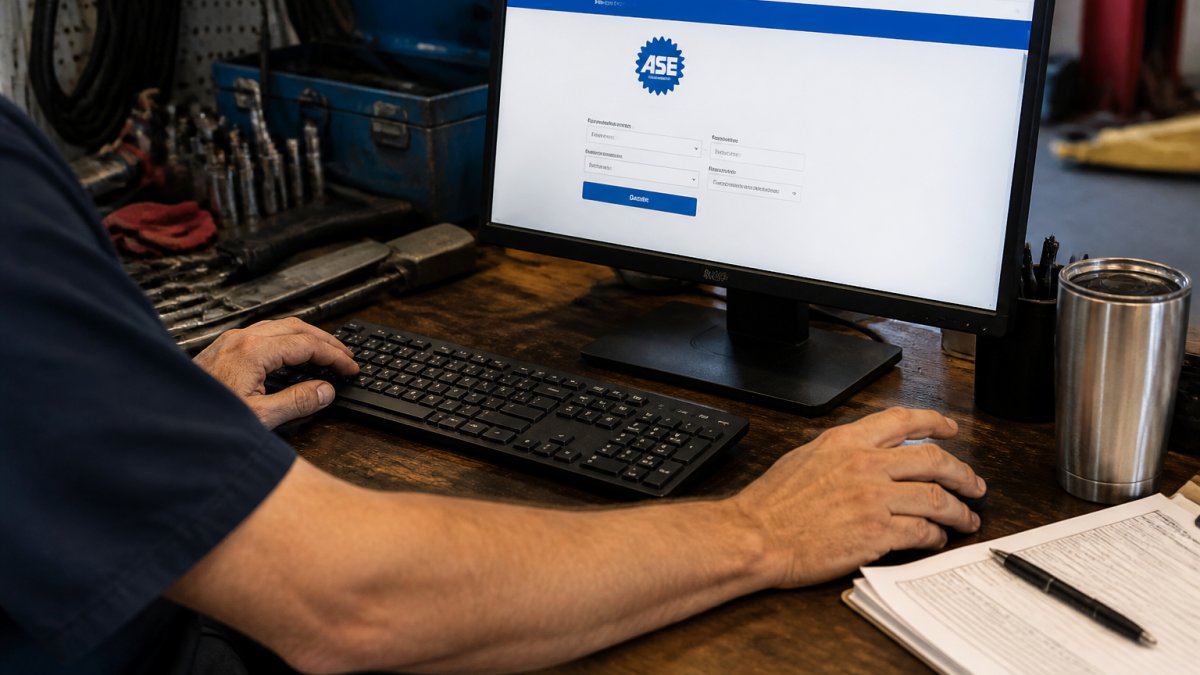
Step 1: Access the ASE Certification Lookup Portal
Navigate to ase.com and look for the “Find a Certified Professional” tool. The official database is the authoritative source, not Facebook reviews, word of mouth, or shop claims.
The portal is free, requires no login, and returns results instantly.
Step 2: Search by Technician Name or ID
Search by technician’s full name or ASE ID number (faster and eliminates ambiguity).
If the technician appears in the database with their name, ID, and certification details, they’re certified. If not, they’re not certified, regardless of claims.
Step 3: Review Certification Details and Expiration Dates
Once you find the technician, check five critical details:
Certification Areas: Confirm the specific areas they hold (e.g., A5 for Brakes, A2 for Automatic Transmissions). A technician might be certified in one area but not another; verify the database shows certification in your repair area.
Expiration Date: ASE certifications are valid for five years. If today’s date is past the expiration date, the certification is no longer active.
Certification Status: Only Active status is acceptable. Expired means they stopped keeping up with standards. Suspended is a serious red flag.
Number of Current Certifications: The database lists all current certifications. Verify the technician holds certification in your specific repair area.
Step 4: Verify the Technician’s Name Matches Your Work Order
Confirm the name on your work order matches the name in the ASE database. Ask for the technician’s full legal name to prevent confusion.
What to Do If You Find a Discrepancy
If certification status doesn’t match claims or no record exists: (1) Ask the shop directly; (2) Request a different certified technician; (3) Document the issue with screenshots; (4) Report suspected fraud to the National Institute for Automotive Service Excellence.
Understanding ASE Blue Seal of Excellence
The ASE Blue Seal of Excellence is a shop-level credential earned by repair facilities that employ at least one ASE-certified technician, maintain proper equipment and facilities, and follow professional standards. It’s harder to fake than individual certifications and represents a commitment backed by the National Institute for Automotive Service Excellence.
At 208 Tire & Auto Shop, our blue seal reflects our investment in team expertise and facility capabilities.
Benefits of ASE Certified Auto Repair
ASE-certified technicians provide accuracy through rigorous exams, accountability (revoked certifications for poor work), current knowledge via ongoing education, protection through warranties, and reduced risk of unnecessary repairs.
ASE Certification Expiration and Renewal Requirements
ASE certifications expire every five years to ensure technicians stay current with industry changes. Renewal isn’t automatic, technicians must actively recertify. Each certification has its own expiration date, so a technician might be current in one area but expired in another. Checking expiration dates confirms current competency.
How to Verify a Repair Shop’s ASE Status
Verifying a shop differs from verifying an individual technician. The ASE Blue Seal of Excellence is awarded to repair facilities meeting organizational standards, but does not guarantee every technician is certified.
Understanding the Difference: ASE-Certified Technician vs. ASE-Recognized Shop
This distinction is critical and often misunderstood:
ASE-Certified Technician: An individual who has passed an ASE exam in one or more specialty areas (engine repair, brakes, transmission, etc.). Their certification is verifiable in the official ASE database. Their credential is personal and portable, if they leave one shop and join another, their certification goes with them.
ASE Blue Seal of Excellence (Shop-Level): A credential earned by a repair facility (not an individual) that demonstrates the shop meets standards for equipment, facility cleanliness, customer service, and employment of at least one ASE-certified technician. The seal is awarded to the business, not to individual employees. A shop can display the seal and still have technicians on staff who are not ASE-certified.
Key implication: A shop with a blue seal has at least one certified technician, but not necessarily the technician working on your car. You must verify the individual technician separately, even if the shop displays the seal.
Check for the Blue Seal Display
Walk into the shop or visit their website. Look for the official ASE Blue Seal of Excellence. It is a blue circular badge with the ASE logo and typically displays the year it was awarded. A legitimate shop displays this proudly because it represents their commitment to quality and professional standards.
The seal should look official. It comes from the National Institute for Automotive Service Excellence and has specific design elements: the ASE acronym, a blue color scheme, and the year of certification. If something looks off, homemade, or uses incorrect colors or fonts, it’s probably not legitimate.
If you don’t see a seal in the shop, ask about it directly. Some shops might have it in a back office, on their website, or on their business cards.
Ask About Individual Technician Certifications
The blue seal tells you the shop meets certain organizational standards. But you need to know who is actually working on your car. Ask the shop:
- “Which technicians on your staff are ASE-certified?”
- “What areas are they certified in?”
- “Who will be working on my vehicle?”
A reputable shop can answer these questions immediately and provide names. They’re proud of their certified staff and can tell you exactly who holds which certifications. They may even provide you with a list of certified technicians and their specialties.
If the shop can’t tell you who their certified technicians are, or if they give vague answers like “most of our guys are certified” or “we have certified staff,” that’s a problem. They should know their own team’s credentials with specificity. Transparency regarding these qualifications is essential for building trust, and the process of verifying technician credentials extends to specialized fields like paintless dent repair.
Verify Individual Technicians Using the Official Database
Once you have the technician’s name, use the ASE lookup tool (ase.com, “Find a Certified Professional”) to verify them independently. Do not rely on the shop’s word. The database is the source of truth. Search for the technician by name or ASE ID and confirm:
- Their certification is Active (not Expired or Suspended)
- Their certification covers the work you need (e.g., A5 for Brakes, A1 for Engine Repair)
- The expiration date is in the future
If you cannot find the technician in the database, or if their certification is expired, inform the shop and request a different technician whose credentials you can verify.
Red Flags: Spotting Expired, Fabricated, or Suspicious Credentials
Several warning signs suggest a shop’s credentials aren’t legitimate or current:
1. Blue Seal Inconsistencies: The seal looks different from the official design, displays an incorrect year, or has misspelled text. The official seal is updated annually and includes the current year.
2. No Technician Names: The shop claims to be “ASE-certified” but cannot name a single certified technician. This is a contradiction.
3. Technician Not in Database: You verify the technician they named and find no record in the official ASE database.
4. Expired Certifications: You find the technician in the database, but their certification is expired. They’re working on your vehicle without current credentials.
5. Certification Mismatch: The technician is certified in one area (e.g., Engine Repair) but you need work in another area (e.g., Transmission).
6. Vague or Defensive Responses: When you ask about certifications, the shop becomes evasive, dismissive, or defensive.
**7.
What to Do If You Discover a Problem
If you find that a shop’s credentials don’t match their claims:
-
Document everything. Take screenshots of the ASE database search (or the absence of a result), note the date and time, and save any marketing materials where the shop claimed to be ASE-certified.
-
Ask the shop to explain. It’s possible there’s a database lag or a name-matching issue. Give them a chance to clarify. Ask them to provide proof of the technician’s certification.
-
Request a refund or reassignment. If the technician working on your car is not certified as claimed, ask the shop to reassign the work to a certified technician or refund your service charge.
-
Report to your state’s automotive board. If the shop falsely advertised ASE certification, you can file a complaint with your state’s Department of Consumer Affairs or equivalent licensing body. False credential claims may violate consumer protection laws.
-
Report to ASE. You can notify the National Institute for Automotive Service Excellence of suspected credential fraud through their website. They investigate and can revoke blue seals or take other enforcement action.
Common Verification Mistakes to Avoid
Many people skip the verification step entirely. They assume a shop is legitimate because it’s been around a long time or has good reviews.
Another common error is checking only the shop’s website. Shops can claim anything online. The official ASE database is the only source of truth.
Some people verify a technician once and assume they’re always certified. Certifications expire. Someone certified last year might be expired now.
Another mistake is confusing the blue seal with individual certifications. A shop might display the seal, but that doesn’t mean every technician is certified.
People sometimes accept vague answers about certifications.
Finally, don’t assume that a technician’s certification covers what you need. Someone might be ASE-certified in engine repair but not brakes. Ask which areas they’re certified in.
Frequently Asked Questions
Can you look up if a specific mechanic is ASE certified?
Yes. The ASE official website has a free certification lookup tool where you can search by the technician’s name or ID number. You’ll see their current certification status, which certifications they hold (engine, brakes, transmission, etc.), and expiration dates. This is the most reliable way to verify a mechanic’s credentials before trusting them with your vehicle.
What does the ASE Blue Seal of Excellence mean?
The Blue Seal of Excellence indicates that a repair facility meets ASE standards for technician qualifications, shop management, and customer service. It means the shop has met rigorous testing standards and maintains ongoing professional development. However, not every technician at a Blue Seal shop is individually ASE certified, so verify individual credentials separately.
Do ASE certifications expire, and what happens if a technician’s has?
Yes, ASE certifications expire every five years. Technicians must pass recertification exams or complete continuing education to renew. If a mechanic’s certification has expired, they are no longer officially ASE certified, even if they were previously. Always check expiration dates when verifying credentials to ensure you’re working with an actively certified professional.
How can I tell if an auto repair shop is ASE certified?
Look for the ASE Blue Seal of Excellence displayed in the shop, on their website, or in promotional materials. Ask the shop manager directly about their technicians’ certifications and verify individual credentials using the ASE lookup tool. Legitimate shops are transparent about their staff’s qualifications and won’t hesitate to provide names for verification.
When you need vehicle service, knowing who’s working on your car matters. ASE certification is the clearest way to confirm a technician’s expertise. At 208 Tire & Auto Shop, we maintain current ASE certifications across our team because we believe you deserve that confidence. Take two minutes to verify credentials before you book service anywhere. It’s the simplest way to protect your vehicle and your wallet. Schedule service with us and work with technicians you can trust.

