

Table of Contents
- Signs of Bad Struts and Shocks to Watch For
- DIY Diagnosis vs. Professional Suspension Inspection
- What to Look for in a Suspension Repair Shop
- Understanding Suspension Repair Cost Estimates
- Benefits of ASE-Certified Mechanic Services
- Questions to Ask Before Choosing Your Shop
- Frequently Asked Questions
Last Updated: September 28, 2026
Signs of Bad Struts and Shocks to Watch For
Shocks and struts absorb road impact and keep your tires in contact with the pavement. When they fail, your vehicle sends clear warning signals. Recognizing these signs early prevents expensive damage to other suspension components.
Visual and Auditory Warning Signs
A clunking noise when driving over bumps, potholes, or during turns indicates worn shocks, struts, or loose mounting hardware. Excessive bouncing after a bump, the vehicle should settle in one or two bounces, signals damping failure.
Look for oily residue around the base of shocks or struts, a sign of hydraulic fluid leaks. Uneven tire wear, where one edge wears faster than the center, indicates alignment issues from worn suspension geometry.
Handling and Ride Quality Changes
Failing suspension causes the car to pull during braking, excessive body roll when cornering, and heavier steering. These changes directly impact safety and vehicle control.
A bumpy, harsh ride where potholes feel severe indicates shocks or struts have lost damping ability. Compare your vehicle’s current feel to how it felt a year or two ago.
DIY Diagnosis vs. Professional Suspension Inspection
You can perform basic visual inspections for fluid leaks, tire wear, and noises. However, suspension diagnosis requires specialized equipment and expertise that most owners lack.
What You Can Diagnose at Home
Inspect each shock and strut for oily residue around the rod and cylinder, dry components function properly; oily ones need replacement. Check tires for uneven wear on inner or outer edges. Use the penny test (insert a penny into the tread; if you see Lincoln’s head, tread is too low) to confirm accelerated wear.
During a test drive over bumps, listen for clunking (metal-on-metal), creaking (flexing), or squeaking (high-pitched) sounds. Note when the noise occurs, over bumps, during turns, braking, or acceleration, to help a technician identify the failing component.
Perform the bounce test: push down firmly on each corner of your vehicle and release. The vehicle should bounce once or twice and settle. If it bounces more than twice or oscillates for several seconds, your shocks or struts have lost damping ability. Compare all four corners; uneven response between sides indicates a problem on the side that bounces more.
What Requires Professional Equipment and Expertise
A suspension repair shop uses computerized alignment racks to measure camber, caster, and toe angles to 0.1-degree tolerances, misalignment invisible to the naked eye.
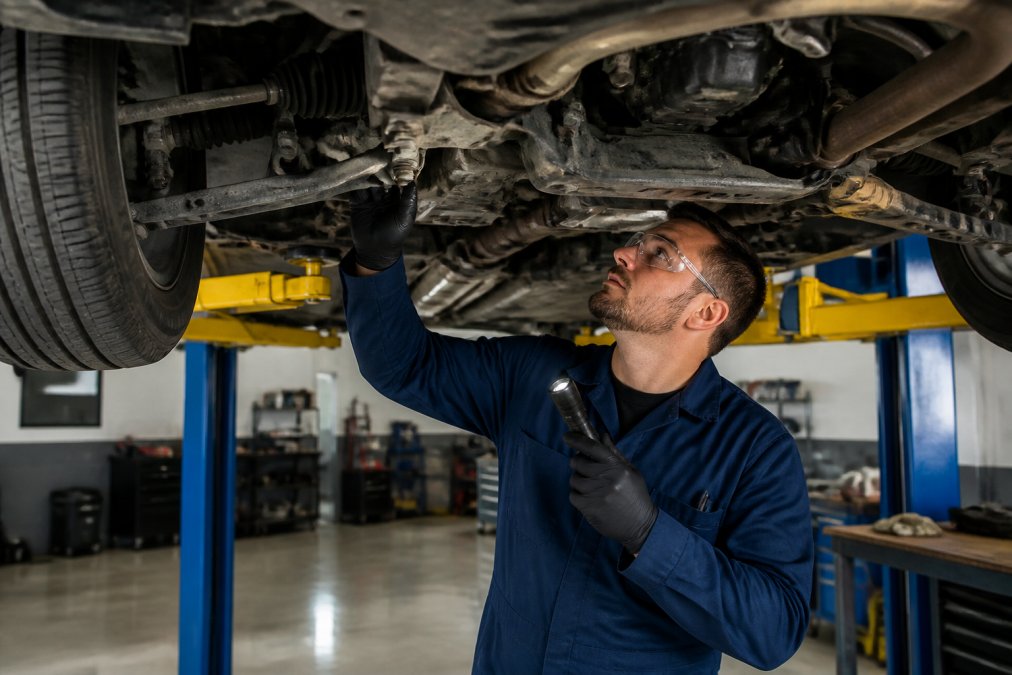
Technicians use a lift to inspect components under full weight and suspended, revealing worn ball joints, tie rod ends, and bushings. They also test steering response and play.
ASE-certified technicians distinguish between similar symptoms caused by different components, a clunking noise could come from a worn strut mount, loose sway bar link, failing ball joint, or worn bushing. Professional inspection identifies the specific culprit.
An ASE-certified technician performs comprehensive undercarriage inspection, tests suspension geometry, and provides a written report identifying which components need attention and why.
When to Skip DIY and Go Straight to a Shop
If you hear clunking, feel excessive bouncing, or notice pulling, schedule a professional inspection immediately. Suspension components do not self-repair, and continued driving on failed components damages tires, wheels, and the frame.
If you’ve already replaced shocks or struts within the last three years and are experiencing similar symptoms again, a professional diagnosis is essential. Premature failure can indicate an underlying alignment issue, a bent component, or a problem with the mounting hardware that a DIY inspection cannot reveal.
What to Look for in a Suspension Repair Shop
Choosing the right suspension repair shop matters. Quality depends on technician knowledge, diagnostic tools, and parts used, don’t compromise on quality for price.
ASE Certification and Technician Credentials
ASE certification is the gold standard in automotive repair. ASE-certified technicians have passed rigorous exams covering suspension systems, steering components, and diagnostics.
When calling a suspension repair shop, ask specifically how many ASE-certified technicians work there and their certification areas. Suspension work should be performed by someone with ASE certification in suspension and steering systems.
Ask about the shop’s experience with your specific vehicle type. If you drive a lifted truck, confirm they’ve performed suspension work on similar vehicles.
Service Area Coverage and Local Availability
Confirm the suspension repair shop serves your area and offers convenient service hours, including early morning or evening appointments if needed.
Ask about turnaround time. A reputable shop provides honest timelines and keeps you updated.
Understanding Suspension Repair Cost Estimates
Suspension repair costs vary by components, vehicle type, and parts quality. Get a detailed written estimate itemizing labor, parts, and diagnostic fees separately.
What Affects Your Repair Price
Labor rates vary significantly by location and shop type. A straightforward strut replacement might take 1.5 to 2 hours of labor, while a full suspension overhaul involving multiple components can require 4 to 8 hours.
Parts availability also affects timing and cost. If a specific component must be ordered, your repair takes longer and may incur additional charges for expedited shipping or a rental vehicle if you need transportation while your car is being serviced. These logistical delays often mirror the scheduling complexities encountered during automotive body repair, where the choice between specialized techniques and traditional methods can significantly alter your vehicle’s downtime.
OEM vs. Aftermarket Parts and Longevity
Original Equipment Manufacturer (OEM) parts are made by your vehicle’s manufacturer or their authorized suppliers. They match your vehicle’s original specifications exactly and typically last longer than aftermarket alternatives. OEM suspension components often provide better ride quality, durability, and warranty coverage.
Aftermarket parts are produced by third-party manufacturers. Quality varies significantly among aftermarket brands. Premium aftermarket brands like Monroe, KYB, and Bilstein perform nearly as well as OEM parts at lower cost, while budget brands may wear out in 2 to 3 years. A reputable suspension repair shop will explain the difference and help you choose based on your budget and durability expectations.
The cheapest repair isn’t always the best value. Ask your technician which parts they recommend and why. Their recommendation should be based on your vehicle’s needs and your budget constraints, not on maximizing their profit.
Getting Multiple Estimates
Obtain written estimates from at least two shops before committing to a repair. Estimates should list the specific components being replaced, the parts brand and type (OEM or aftermarket), labor hours and rate, and any additional fees. Compare not just the total price but the component breakdown.
Be wary of estimates that seem unusually low. A quote significantly below the market rate may indicate the shop is using very low-quality parts, cutting corners on labor, or planning to upsell you additional repairs once your vehicle is on the lift. Conversely, the most expensive estimate isn’t always the best. A shop’s reputation, ASE certification of technicians, and warranty on work matter more than raw price.
Benefits of ASE-Certified Mechanic Services
Working with an ASE-certified mechanic provides several concrete advantages. First, you get accurate diagnosis. An ASE-certified technician won’t waste your money replacing components that don’t need replacement. They’ll identify the actual problem and explain why specific repairs are necessary.
Second, you receive work that meets industry standards. ASE certification requires ongoing education, so certified technicians stay current with evolving vehicle technology and repair techniques. Your suspension repair is performed correctly the first time, reducing the risk of comebacks or additional problems.
Third, many ASE-certified shops stand behind their work with warranties. If a repair fails prematurely due to workmanship, the shop will redo it at no additional cost. This accountability protects you and gives you confidence in the repair quality.
Questions to Ask Before Choosing Your Shop
Before committing to a suspension repair shop, ask these important questions. First, “Are your technicians ASE-certified in suspension and steering systems?” Listen for specific answers with names and certification details, not vague assurances.
Second, ask “What is your typical turnaround time for suspension repairs, and how do you keep customers updated?” A shop that communicates regularly and meets deadlines shows professionalism and respect for your time.
Third, “Do you offer a warranty on suspension repairs and parts?” Reputable shops warranty their work.
| Warning Sign | What It Means | Professional Action |
|---|---|---|
| Clunking noise over bumps | Worn shocks/struts or loose hardware | Full suspension inspection required |
| Excessive bouncing | Shock/strut damping failure | Component replacement needed |
| Fluid leaks under vehicle | Hydraulic fluid loss from components | Immediate repair to prevent damage |
| Uneven tire wear | Alignment issues from worn suspension | Alignment and component replacement |
| Pulling during braking | Suspension geometry misalignment | Diagnostic inspection and repair |
| Harsh, bumpy ride | Loss of damping capability | Shock or strut replacement |
EXTERNAL SOURCES:
Frequently Asked Questions
What are the most common signs that my car needs suspension repair?
Watch for clunking noises when going over bumps, a bouncy or drifting ride, uneven tire wear, or difficulty steering. Your vehicle may also sit lower on one side or pull to one direction while driving. If you notice any of these symptoms, a professional suspension inspection can identify whether you need shocks, struts, ball joints, control arm bushings, or wheel alignment work.
How much does suspension repair typically cost, and what affects the estimate?
Suspension repair costs vary based on which components need replacement, whether you choose OEM or aftermarket parts, and your vehicle’s make and model. A single shock or strut replacement costs differently than a full suspension overhaul. For an accurate suspension repair cost estimate tailored to your vehicle, contact a certified shop directly. A certified shop can explain what work is truly necessary versus preventative maintenance.
Why should I choose an ASE-certified mechanic for suspension work?
ASE-certified technicians have passed rigorous exams and maintain ongoing training in automotive systems, including suspension geometry and diagnostic procedures. ASE-certified mechanic benefits include verified expertise, accountability, and access to industry best practices. A certified shop is more likely to perform accurate diagnostics, avoid unnecessary repairs, and back their work with confidence. Ask to see certifications before you commit.
How do I know if a shop is being honest about what repairs I actually need?
Request a written estimate that details each repair, the parts involved, and labor time. Ask the technician to explain why each repair is necessary and whether any work is preventative versus urgent. A trustworthy shop will perform a thorough vehicle inspection and road test, show you the problem, and answer your questions without pressure. If you’re uncertain, seek a second opinion from another certified shop before approving expensive work.

