

Table of Contents
- Understanding Winter Tire Basics for Idaho Conditions
- Winter Tires vs. All-Weather Tires: Which Is Right for You
- How to Read Tire Size and Speed Rating for Winter Selection
- Checking Winter Tire Tread Depth and Wear Indicators
- When to Install Winter Tires and Remove Them
- Studded vs. Studless Winter Tires for Mountain Passes
- Getting Your Winter Tires Installed and Maintained
- Frequently Asked Questions
Last Updated: October 5, 2026
Understanding Winter Tire Basics for Idaho Conditions
Learning how to choose tires for Idaho winters starts with understanding that winter driving in Idaho demands tires built for snow, ice, and cold. At 208 Tire & Auto Shop, we help drivers understand what makes winter tires different.
Winter tires are engineered for cold-weather performance. Their softer rubber compound stays flexible below 45°F, while all-season tires harden and lose grip on snow and ice.
Winter treads feature more sipes, tiny cuts that bite into snow and ice, plus deeper channels that shed water and slush.
Idaho winters bring steep mountain passes, freeze-thaw ice, elevation-driven pressure changes, and long highway stretches with limited services. Winter tires address each, a practical safety tool, not a luxury.
Winter Tires vs. All-Weather Tires: Which Is Right for You
The choice between dedicated winter tires and all-weather tires comes down to your routes, mileage, and how much you value stopping distance on ice.
The three tire categories that matter
- All-season tires carry the M+S (mud and snow) marking but are not certified for severe snow. They harden below roughly 45°F and lose grip on ice and packed snow.
- All-weather tires carry the Three-Peak Mountain Snowflake (3PMSF) symbol, meaning they meet a standardized snow-traction test. They stay flexible in cold and can be run year-round.
- Dedicated winter tires also carry the 3PMSF symbol but use softer compounds and denser siping tuned specifically for ice and deep snow. They are not intended for year-round use.
What the 3PMSF symbol actually means
The Three-Peak Mountain Snowflake is earned by meeting a defined snow-traction threshold in standardized testing. All-weather and winter tires carry it; most all-season tires do not.
Evidence-based traction comparison
Independent testing shows a consistent pattern:
- On ice and packed snow: Winter tires stop shortest, all-weather in the middle, all-season longest.
- On cold dry pavement: Winter tires still hold an edge because their compound stays pliable.
- On wet pavement above 50°F: All-season and all-weather often outperform winter tires, which wear faster in warmth.
Winter tires win where it matters most, ice and snow, but aren’t the best choice for warm months.
Total seasonal cost: the math most guides skip
Sticker price alone is misleading.
A route-, mileage-, and weather-based decision framework
Use this checklist:
- Regular mountain passes or high-elevation routes? Dedicated winter tires are safer.
- Daily commute through snow and ice? Winter tires pay for themselves in stopping distance.
- Mostly valley driving with occasional snow? All-weather tires may suffice.
- Fewer than a few thousand miles per winter? All-weather is a reasonable compromise.
- Want one tire year-round, no swaps? All-weather is the practical pick.
- Want maximum safety margin regardless of cost? Dedicated winter tires win.
Vehicle-specific fitment matters
- AWD and 4WD: These help you accelerate, not stop, and don’t replace winter tires. Install on all four wheels, mismatched tires can confuse the drivetrain.
- Front-wheel drive: Winter tires on the front help traction and steering, but installing only two creates rear-end spin risk. Match all four.
- Rear-wheel drive: These benefit most from winter tires due to the least natural traction. Match all four.
Bottom line
All-weather tires are convenient and capable in light snow. Dedicated winter tires are safer in the conditions causing most winter crashes, ice, packed snow, and cold pavement.
Store your off-season tires in a cool, dry place away from direct sunlight. Proper storage extends tire life and keeps them ready for the next season.
How to Read Tire Size and Speed Rating for Winter Selection
Tire sidewalls contain codes that tell you everything about the tire, helping you understand how to choose tires for Idaho winters.
A typical tire size looks like this: P215/65R15 95H
Here’s what each number means:
- P = Passenger vehicle tire
- 215 = Width in millimeters
- 65 = Aspect ratio (sidewall height as percentage of width)
- R = Radial construction
- 15 = Wheel diameter in inches
- 95 = Load index (how much weight the tire can carry)
- H = Speed rating (maximum safe speed)
Load index and speed rating matter for winter selection. Your door jamb or owner’s manual lists the correct size and minimum load index, never go below these.
Speed ratings range from A to Z. Common ratings include:
- H = Up to 130 mph
- T = Up to 118 mph
- S = Up to 112 mph
- Q = Up to 99 mph
Winter tires often have lower speed ratings than all-season tires, normal, since they prioritize grip. For Idaho, an H or T rating provides plenty of safety margin.
Match your winter tire size exactly to what’s on your vehicle, the wrong size affects speedometer accuracy, fuel economy, and handling.
Checking Winter Tire Tread Depth and Wear Indicators
Tread depth directly affects winter performance. Shallow tread reduces traction on snow and ice, increasing stopping distance and accident risk.
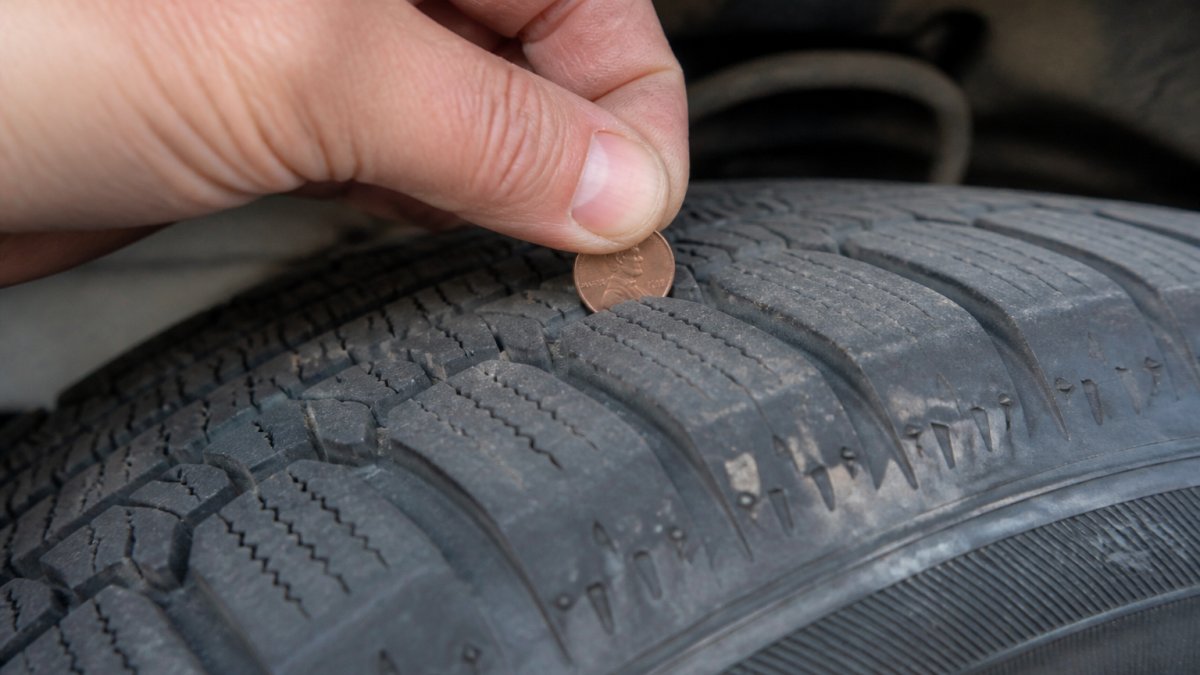
Winter tires should have at least 6/32 of an inch of tread depth for safe winter driving. All-season tires are considered worn out at 4/32 of an inch.
Check tread depth with the penny test:
- Insert a penny into the tread groove with Lincoln’s head facing down
- If you can see the top of Lincoln’s head, tread is too shallow
- Repeat at multiple locations
A tread depth gauge, available at any tire shop, gives more precise measurements.
Look for wear indicators, raised bars between the tread grooves. When tread wears down to these bars, the tire is worn out and unsafe. Replace immediately.
Uneven wear patterns signal problems:
- Center wear = Overinflation
- Edge wear = Underinflation
- Patchy wear = Alignment or suspension issues
Rotate winter tires every 5,000 to 7,000 miles to promote even wear and consistent performance.
Driving on winter tires with tread below 6/32 inch significantly increases stopping distance on snow and ice. This is one of the most common causes of winter accidents in Idaho.
When to Install Winter Tires and Remove Them
Timing matters: install too late and you face unsafe conditions; remove too early and you lose protection during spring freeze-thaw cycles.
Install winter tires when temperatures consistently drop below 45°F. In Idaho, this typically means mid-October to early November, depending on your location and elevation. Mountain areas need earlier installation than valley locations.
Remove winter tires when daytime temperatures consistently stay above 50°F, usually late March or early April. Spring snow is common in Idaho, so don’t rush. If uncertain, keep them on, they work fine in warm weather, though they wear faster.
Mark your calendar with these reminders:
- Mid-October: Schedule winter tire installation
- Late March: Plan removal appointment
- Check weather forecasts before switching
- Keep emergency supplies in your vehicle during transition months
Plan ahead, shops get busy during peak installation times, so schedule early.
Studded vs. Studless Winter Tires for Mountain Passes
Mountain passes present the harshest winter conditions most drivers face: steep grades, shaded ice, and sudden storms.
Studded winter tires
Studded tires have metal studs that bite into ice, excelling on pure ice and hard-packed snow, exactly what shaded mountain grades offer.
Studless winter tires
Seasonal studded-tire windows
Most states allowing studded tires restrict them to a defined season, typically late fall through early spring, to limit pavement damage.
Traction-device requirements: the part most guides miss
Winter tires and traction devices are not the same thing to road authorities. During severe storms, officials may post chain requirements on specific passes:
- A sign may require chains or approved traction devices regardless of tire type.
- Some restrictions exempt certain tire configurations, but exemptions vary.
- Winter tires do not automatically satisfy a chain requirement.
How to check current conditions before you drive
Before any mountain-pass trip in winter:
- Check the state transportation department’s road-condition and chain-requirement page for your route.
- Review current and forecast weather for the pass, not just your starting city.
- Confirm whether traction devices are required, recommended, or not mentioned.
- Carry chains or approved traction devices even if not currently required, conditions change fast at elevation.
- Tell someone your route and expected arrival time.
Chains and tire socks as supplements
- Chains provide the highest traction on ice and deep snow and are most often required by posted restrictions, but are slow to install and have speed limits.
- Tire socks are fabric covers that improve traction on snow and ice, install faster and ride quieter than chains, but wear quickly on bare pavement and aren’t always approved where chains are required.
Treat chains and socks as supplements to winter tires, not replacements.
Route-based guidance
- Treasure Valley and lower-elevation valley routes: Studless winter or quality all-weather tires handle most winters; studded tires are rarely necessary.
- Idaho Falls and eastern high-desert routes: Cold, wind-driven snow and ice are common. Studless winter tires are a strong default; studded tires help on frequent ice.
- Mountain passes and northern routes: Expect shaded ice, steep grades, and posted traction requirements. Studded tires, or studless winter tires plus chains in the vehicle, is the safest combination.
Vehicle-specific notes
- AWD and 4WD: These help you climb but not stop, and don’t exempt you from traction-device requirements.
- Front-wheel drive: Winter tires on all four wheels plus chains in the trunk covers most pass scenarios.
- Rear-wheel drive: The most traction-limited layout. Studded or high-quality studless winter tires on all four wheels are strongly recommended for pass driving.
Bottom line
For most drivers, modern studless winter tires are the better everyday choice, quieter, longer-lasting, nearly as capable.
Studless winter tires have improved dramatically in recent years. Most drivers find them superior to studded tires for overall winter driving, combining good ice grip with better performance on snow and wet roads. But no winter tire replaces a posted chain requirement, check conditions before every mountain trip.
Getting Your Winter Tires Installed and Maintained
Professional installation ensures your winter tires perform correctly. Improper mounting or balancing reduces safety and tire life.
When you bring your vehicle to 208 Tire & Auto Shop for winter tire installation, our ASE-certified technicians handle several critical steps:
- Remove all-season tires and inspect them for damage
- Mount winter tires on wheels (or transfer to your existing wheels)
- Balance tires for smooth, vibration-free driving
- Set tire pressure to manufacturer specifications
- Check alignment and suspension components
- Inspect brakes and other winter-critical systems
Tire pressure changes with temperature, so check and adjust after installation. Your door jamb lists the correct cold-tire pressure.
Winter maintenance keeps tires performing safely:
- Check tire pressure monthly (cold reduces pressure)
- Rotate every 5,000 to 7,000 miles
- Inspect tread depth regularly
- Look for damage, cuts, or bulges
- Monitor for uneven wear
Winter tires wear faster than all-season due to softer compounds. Plan for replacement after 3 to 5 seasons, depending on driving habits and road conditions.
When spring arrives, have winter tires removed and all-season tires reinstalled. Store winter tires properly to extend their life for next season.
Frequently Asked Questions
What is the 7/32-inch rule for winter tires?
The 7/32-inch rule is a safety benchmark for winter tire tread depth. While the legal minimum tread depth is 2/32 inch, winter tire performance drops significantly below 7/32 inch, especially on snow and ice. Many experts recommend replacing winter tires when they reach 6/32 inch or lower. You can check this using the penny test: insert a penny upside down into the tread. If you can see the top of Lincoln’s head, your tread is too shallow for winter conditions.
Should I choose winter tires or all-weather tires for mountain driving?
Winter tires are the better choice for mountain passes and heavy snow conditions. Winter tires have a rubber compound that stays flexible in cold temperatures, providing superior grip on snow and ice. All-weather tires offer year-round versatility but don’t perform as well in extreme cold or deep snow. For frequent mountain driving during winter months, winter tires deliver better traction, shorter braking distances, and more predictable handling on icy roads.
When should I install winter tires in the fall?
Install winter tires when temperatures consistently drop below 45°F, typically in October or November. This timing varies yearly based on weather patterns. Winter tire rubber compounds are designed to grip better in cold conditions, so switching early ensures you’re prepared before the first snow. Remove them in spring when temperatures stay above 45°F for several days. Switching too late or too early wastes tire life and money.
How do I know what tire size fits my vehicle?
Find your vehicle’s tire size on the driver’s door jamb label, owner’s manual, or the sidewall of your current tires. The size appears as a code like 225/65R17, where 225 is the width in millimeters, 65 is the aspect ratio, R means radial, and 17 is the wheel diameter in inches. Always use the exact size specified by your vehicle manufacturer. Using the wrong size can affect speedometer accuracy, fuel efficiency, and safety. When shopping for winter tires, provide this size to ensure proper fitment.

