

Table of Contents
- What the Numbers and Letters on Your Tire Actually Mean
- Step-by-Step: How to Read Tire Size on Your Sidewall
- Tire Sidewall Markings Explained: Load Index, DOT Code, and More
- What Does the Letter on a Tire Mean? Speed Ratings Decoded
- Tire Speed Rating Chart: What Each Letter Means for Your Driving
- Tire Load Index Chart: Making Sure Your Tires Can Handle the Weight
- Why Speed Ratings Matter for Safety, Insurance, and Comfort
- When to Replace Tires and How to Check Wear
- Frequently Asked Questions
Last Updated: September 25, 2026
What the Numbers and Letters on Your Tire Actually Mean
Learning how to read tire size and speed rating starts with one fact: every tire carries a sidewall code that tells you what it fits and how fast it can safely go. That code follows a standard industry format.
Step-by-Step: How to Read Tire Size on Your Sidewall
Reading your tire size takes about two minutes. Grab a flashlight and a rag for the road grime.
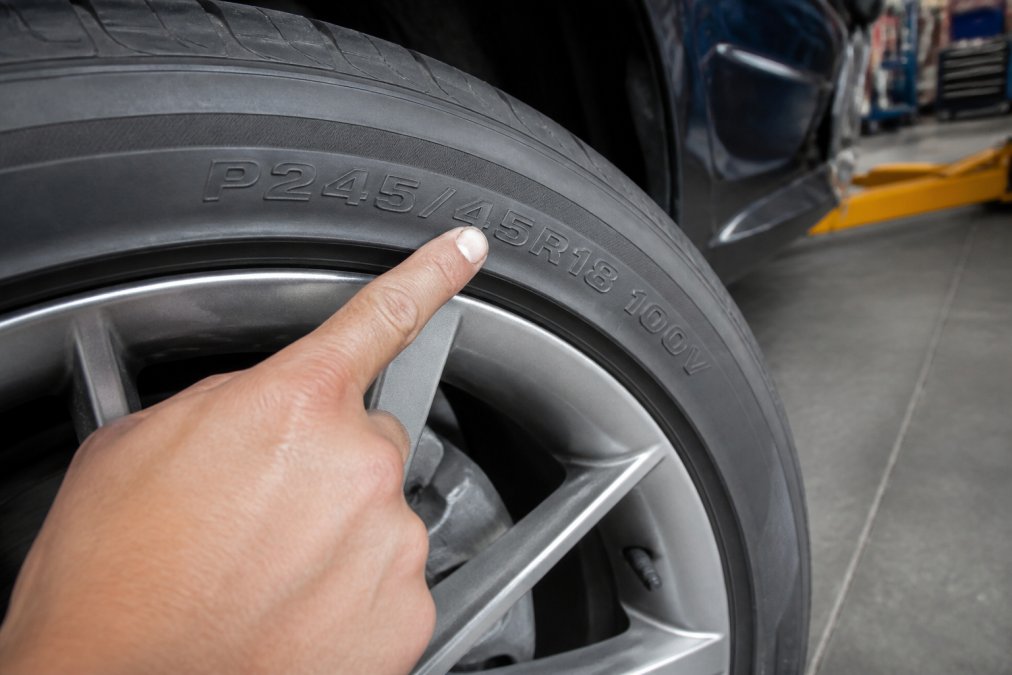
- Park on level ground and set the parking brake.
- Find the alphanumeric code on the outer sidewall. It starts with a letter or number.
- Write down the full sequence, for example P215/65R16.
- Note the load index and speed rating after the size.
- Compare it to the sticker inside your driver’s door jamb.
Breaking Down a Standard Tire Size
Take P215/65R16. Here is what each part means:
- P = passenger vehicle tire
- 215 = section width in millimeters
- 65 = aspect ratio, meaning the sidewall height is 65% of the width
- R = radial construction
- 16 = rim diameter in inches
The aspect ratio trips people up most: a lower number means a shorter sidewall and wider-looking tire, a higher number more cushion between wheel and road.
Finding Your Vehicle’s Recommended Tire Size
Your vehicle manufacturer specifications beat anything printed on an old tire. Check the driver’s door jamb sticker first for the original tire size, load index, and speed rating.
Never assume the tires on a used car match the door sticker. Previous owners sometimes install the wrong size. Check before you buy replacements.
Tire Sidewall Markings Explained: Load Index, DOT Code, and More
A sidewall also shows the load index, speed rating, DOT code, tread wear, traction rating, and temperature grade.
Tires older than six years should be inspected closely, even with good tread. Rubber hardens with age, and a dated tire can fail without warning.
What Does the Letter on a Tire Mean? Speed Ratings Decoded
The letter at the end of the size code is the speed rating, showing the maximum speed the tire can sustain under load.
Tire Speed Rating Chart: What Each Letter Means for Your Driving
Use this tire speed rating chart to match a rating to your driving. These letters cover most passenger vehicles.
| Speed Rating | Max Speed (mph) | Typical Use |
|---|---|---|
| S | 112 | Family sedans, minivans |
| T | 118 | Standard commuter cars |
| H | 130 | Midsize and sport sedans |
| V | 149 | Performance cars |
| W | 168 | High-performance vehicles |
| Y | 186 | Exotic and track-ready cars |
Matching Speed Ratings to Your Vehicle and Driving Habits
Match the rating to your vehicle manufacturer specifications, not your ego. A commuter car in the Treasure Valley does not need Y-rated tires; a performance car should never drop below its factory rating.
Tire Load Index Chart: Making Sure Your Tires Can Handle the Weight
The load index is the number before the speed letter in the size code. It is a code, not a weight, mapping to a maximum load per tire at a specified inflation pressure: a 95 maps to 1,521 pounds per tire at the manufacturer’s specified pressure.
Load Index to Capacity Per Tire
| Load Index | Capacity Per Tire (lbs) |
|---|---|
| 88 | 1,235 |
| 91 | 1,356 |
| 95 | 1,521 |
| 98 | 1,653 |
| 100 | 1,764 |
| 105 | 2,039 |
| 110 | 2,337 |
| 115 | 2,679 |
| 120 | 3,086 |
| 125 | 3,638 |
Multiply per-tire capacity by the number of tires carrying the load. A four-tire car with 95-rated tires has about 6,084 pounds combined, which must exceed the gross vehicle weight rating (GVWR), not just curb weight, since GVWR includes passengers, cargo, and tongue weight.
Load Index and Speed Rating Work Together
The load index and speed rating are not independent: maximum load drops as speed increases. Manufacturers’ load-inflation tables show a tire rated at 1,521 pounds at 35 psi carries less at sustained higher speeds unless pressure rises. That is why the door sticker lists a specific pressure alongside the size.
Why Lower Load Capacity Is a Real Risk
Running a load index below the door sticker spec creates three problems:
- Overloading. Excess weight builds internal heat and can cause tread separation or sidewall failure, especially on hot highways at sustained speed.
- Faster wear. Extra flex scrubs tread and wears shoulders unevenly, showing up as premature replacement across a fleet set.
- Handling degradation. Less reserve for cornering and braking means longer stopping distances and more chance of losing grip in an emergency maneuver.
Plus-Sizing and Load Index
Moving to a larger wheel diameter drops the aspect ratio to keep overall diameter close to stock, and that shorter sidewall usually means a lower load index for the same tire line. A factory 215/65R16 95H replaced with a 225/45R18 might come in at load index 91 or 95. Compare the new tire’s load index to the door sticker before buying; if it is lower, the tire is not an acceptable replacement.
Towing, Hauling, and Light Trucks
Light trucks and SUVs often use LT-metric tires (for example, LT265/70R17 121/118S). The two slash-separated load index numbers cover single- and dual-wheel applications. LT tires also carry a load range letter (C, D, E) tied to maximum inflation pressure and ply rating; a load range E tire inflates to 80 psi and carries substantially more than a standard passenger tire of the same size.
Snap a photo of your door jamb sticker and keep it on your phone. When you shop for tires, you can compare the load index and speed rating on any candidate tire directly against the factory spec without guessing.
Load index is a capacity code, not a weight. Meet or exceed the door sticker number, account for GVWR and tongue weight, and remember that a higher speed rating does not raise load capacity on its own.
Why Speed Ratings Matter for Safety, Insurance, and Comfort
Speed ratings are not just a top-speed number. They describe how a tire manages heat, cornering force, and braking load, which is why the rating shows up in insurance policies, warranty terms, and the day-to-day feel of the ride.
Heat Is the Real Limit, Not the Number on the Chart
A tire’s speed rating reflects how much heat it sheds at sustained speed under its rated load. Higher-rated tires use stiffer compounds, stronger body plies, and sometimes a different belt package to resist heat buildup. Lower-rated tires use softer compounds and taller sidewalls that flex more, generating less heat at low speeds but limiting sustained high speed before internal temperature climbs past safe limits.
Legal and Insurance Implications of Mismatched Ratings
No federal law makes it illegal to install a lower speed rating than the door sticker calls for on a passenger car. Enforcement happens elsewhere:
- Insurance claims. Most policies require a safe, roadworthy vehicle. After a crash, an adjuster can compare the tires to the manufacturer’s specification; if the installed rating is below spec and contributed to the loss, the claim can be reduced or denied. Policy language, not statute, governs here.
- Warranty coverage. A new-vehicle warranty can be affected if a tire failure traces to a rating or size that does not match the manufacturer’s specification. Dealers document tire data at service visits, so mismatches are easy to spot.
- Liability exposure. In a serious crash, plaintiff attorneys pull tire data, and a rating below the door sticker argues the owner knowingly operated an unsafe vehicle.
- State inspections. A handful of states check tire condition and load capacity during safety inspections. Speed rating is rarely pass/fail, but load capacity below the gross axle weight rating can be.
How Speed Ratings Affect Fuel Economy and Ride Comfort
This is the trade-off almost no guide explains. Lower-rated tires (S, T) have taller sidewalls and softer compounds: the sidewalls absorb road imperfections for a quieter, more compliant ride, and the softer compound can slightly lower rolling resistance for better steady highway fuel economy.
Matching the Rating to How You Actually Drive
- Daily commuter, family sedan, minivan: stay with the factory S, T, or H rating. A higher rating only buys a firmer ride and higher price.
- Sport sedan or performance car: do not drop below the factory V, W, or Y rating. Suspension, brakes, and stability programming were tuned around that tire’s response.
- Towing or hauling: load index matters more than speed rating. A lower speed rating is acceptable if the load index meets or exceeds the door sticker, but check inflation pressure requirements under load.
- Lifted truck or off-road build: expect a lower speed rating (often Q or S) from aggressive tread. Plan highway speeds accordingly and check load range, not just the index.
If the tires on your vehicle do not match the door sticker on load index or speed rating, resolve it before your next long highway trip. The mismatch is easy for an adjuster or dealer to document after an incident, and harder to explain afterward.
When to Replace Tires and How to Check Wear
Replace tires when tread depth hits 2/32 of an inch, the DOT code shows age past six years, or you see cracks, bulges, or uneven wear.
The two numbers most drivers ignore, load index and speed rating, are the two that decide whether a tire is safe for their vehicle. Check the door sticker before you buy.
Frequently Asked Questions
What tire rating is better, H or V?
V is a higher speed rating than H. H-rated tires are certified for speeds up to 130 mph, while V-rated tires handle up to 149 mph. For everyday driving, both are safe. V-rated tires often come on sportier vehicles and may offer slightly sharper handling. H-rated tires usually provide a more comfortable ride and can be more affordable. Always match or exceed your vehicle manufacturer’s recommended speed rating.
Do all four tires need the same speed rating?
Yes, it is strongly recommended that all four tires have the same speed rating. Mixing speed ratings can affect handling and stability, especially during emergency maneuvers. If your vehicle requires a specific rating, installing a lower-rated tire on one wheel can compromise safety and may void your insurance coverage in an accident. Check your owner’s manual or door jamb sticker for the correct rating.
What happens if I install tires with a lower speed rating than recommended?
Installing tires with a lower speed rating than your vehicle manufacturer specifies can reduce handling precision and increase the risk of tire failure at high speeds. It may also affect your insurance coverage if an accident is linked to the wrong tires. Your speedometer and odometer might read inaccurately if the overall diameter changes. Always meet or exceed the recommended speed rating.
Where can I find the correct tire size for my vehicle?
The correct tire size is listed on the driver’s side door jamb sticker, inside the fuel filler door, or in your owner’s manual. It will look like P225/60R16 97H. This includes the section width, aspect ratio, construction type, rim diameter, load index, and speed rating. If you cannot find it, a tire professional can look it up by your vehicle’s year, make, model, and trim.
Tire shopping gets confusing fast, and a wrong size or rating can cost you real money. At 208 Tire & Auto Shop, our ASE-certified technicians match every set to your vehicle’s factory specs, from family cars to commercial fleets. We offer competitive pricing on top-brand tires and wheels, plus flexible financing options when you need them. Schedule Service with 208 Tire & Auto Shop and get the right tires the first time.

