

Table of Contents
- Why Low Brake Fluid Matters for Your Safety
- Sign 1: Soft or Spongy Brake Pedal
- Sign 2: Brake Warning Light on Your Dashboard
- Signs 3-5: Vibrations, Grinding, and Squealing Sounds
- Sign 6: How to Check Brake Fluid Level
- Sign 7: Brake Fluid Leak Symptoms
- Brake Fluid Flush Cost and Maintenance
- What Happens if You Ignore Low Brake Fluid
- Frequently Asked Questions
Last Updated: September 27, 2026
Why Low Brake Fluid Matters for Your Safety
Your brakes are the single most important safety system in your vehicle. Low brake fluid compromises that system completely. When your brake fluid level drops, your hydraulic braking system loses pressure, which means your brakes won’t work as they should. This isn’t a minor maintenance issue, it’s a safety emergency.
The hydraulic system in your car works by transferring force through brake fluid when you press the pedal. Without enough fluid, that transfer breaks down. Your stopping distance increases. Your pedal feels mushy. In extreme cases, you lose braking power entirely.
The signs we cover below will help you catch the problem before it becomes dangerous. Some are obvious. Others sneak up on you. All of them demand immediate attention.
Sign 1: Soft or Spongy Brake Pedal
A soft or spongy brake pedal is one of the earliest warnings that something’s wrong with your brake system. When you press the pedal, it should feel firm and responsive. It should stop your car with steady, predictable pressure.
A spongy pedal feels like you’re pressing into a pillow. Your foot sinks deeper than it should before the brakes engage. This happens because air has entered the hydraulic lines or your brake fluid level is too low to maintain proper pressure.
Low brake fluid is the most common cause. As the fluid level drops, air bubbles can form in the lines. Air compresses easily, unlike fluid. That compression is what creates the spongy feeling. Your brakes still work, but they require more pedal travel to build up enough pressure.
Don’t ignore this. A spongy pedal today can become complete brake failure tomorrow.
If your brake pedal goes all the way to the floor without stopping the car, pull over immediately and call for roadside assistance. Do not drive the vehicle.
Sign 2: Brake Warning Light on Your Dashboard
Your dashboard brake warning light is your car’s way of saying something needs attention. This light typically shows a circular symbol with the word “BRAKE” or looks like a circle with a line through it.
The brake warning light can mean several things. Low brake fluid is one of them. A worn brake pad sensor is another. A problem with the anti-lock brake system is a third. The light doesn’t always tell you which one.
Warning Light vs. Low Fluid: What’s the Difference?
The brake warning light illuminates when the brake fluid level drops below a certain threshold. Your car’s sensor detects this and triggers the light. However, the same light can turn on for other brake system failures.
Here’s how to tell the difference:
If the light came on after you noticed a spongy pedal or heard grinding sounds, low brake fluid is likely the culprit. If the light appeared suddenly with no other symptoms, it could be a sensor malfunction or worn pads. Either way, you need a professional inspection.
The safest approach: treat any brake warning light as urgent. Pull over safely and check your brake fluid level visually. If it’s low, get to a mechanic immediately. If it’s at the proper level, the light may indicate a different problem, but don’t delay getting it checked.
Many drivers assume the brake warning light means low fluid and ignore it. This is dangerous. Even if fluid level is normal, the light signals a brake system problem that needs diagnosis.
Signs 3-5: Vibrations, Grinding, and Squealing Sounds
These three signs often appear together or separately, depending on how far the low brake fluid problem has progressed and what else is happening in your brake system.
Pulsing in the Pedal
A pulsing or vibrating brake pedal feels like your foot is bouncing slightly when you press down. This sensation typically happens during braking and then stops when you release the pedal.
Pulsing can result from several issues. Warped brake rotors are a common cause. Low brake fluid combined with air in the lines is another. The vibration you feel is the brake system struggling to maintain consistent pressure.
This sign often appears alongside a soft pedal. If you notice both, low brake fluid is worth investigating first.
Metal-on-Metal Grinding
Grinding is a harsh, metallic sound that happens when you brake. It sounds like metal scraping against metal. This noise means your brake pads have worn down completely, and the metal backing of the pad is now rubbing directly against the rotor.
Grinding doesn’t always mean low brake fluid, but it can be related. Worn pads create metal dust and debris. This debris can contaminate your brake fluid or block fluid passages. Low brake fluid can also prevent proper brake pad contact, which accelerates wear.
When you hear grinding, get your brakes inspected immediately. Continuing to drive with grinding brakes will damage your rotors, which is expensive to repair.
Squealing Noises
Squealing is a high-pitched sound that often happens when you first apply the brakes or when braking lightly. It’s usually less urgent than grinding, but it still signals a problem.
Squealing can come from worn brake pads, moisture in the brake fluid, or dust buildup. Low brake fluid doesn’t directly cause squealing, but it can contribute to the conditions that do. If you’re hearing squealing and you suspect low brake fluid, have both issues checked.
Sign 6: How to Check Brake Fluid Level
Checking your brake fluid level is something you can do yourself in about five minutes. You don’t need special tools. This simple visual inspection can tell you whether low brake fluid is your problem.
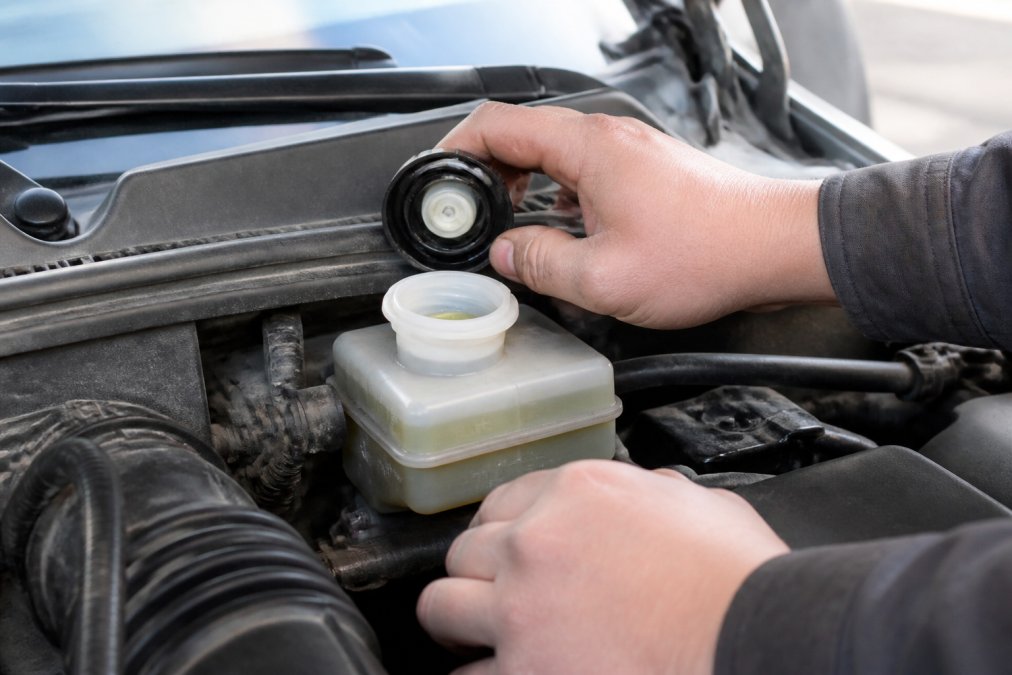
Visual Inspection Steps
Step 1: Open your hood and locate the brake fluid reservoir. It’s a translucent plastic container, usually white or clear, mounted on the driver’s side of the engine bay. Your owner’s manual shows the exact location if you can’t find it.
Step 2: Look at the fluid level through the sides of the container. Most reservoirs have minimum and maximum level marks. The fluid should be between these lines. If it’s below the minimum, you have low brake fluid.
Step 3: Check the color and clarity of the fluid. Healthy brake fluid is clear or slightly amber. If it looks dark brown or black, it’s contaminated and needs flushing. If it’s cloudy or milky, moisture has entered the system.
What Color Should Your Brake Fluid Be?
Brake fluid starts out clear or light amber. This is normal and healthy. Over time, brake fluid absorbs moisture from the air. This darkens the fluid gradually.
If your brake fluid is dark brown or darker, schedule a brake fluid flush within the next month. If it’s cloudy, get it flushed immediately.
Sign 7: Brake Fluid Leak Symptoms
A brake fluid leak is one of the most serious causes of low brake fluid. Unlike gradual absorption of moisture, a leak means you’re losing fluid actively. This can lead to complete brake failure if not addressed quickly.
Finding Leaks Under Your Car
Brake fluid is typically clear or amber, so it’s visible on your driveway or garage floor. Look for small puddles or spots under the front or rear wheels. Brake fluid has a slightly oily appearance and won’t evaporate like water.
Understanding Brake Lines and Master Cylinder Failure
Brake lines are small metal tubes that carry pressurized brake fluid from the master cylinder to each wheel. These lines can develop tiny cracks or pinhole leaks over time, especially if they’re exposed to road salt or debris.
Brake Fluid Flush Cost and Maintenance
Brake fluid maintenance is one of the most overlooked aspects of vehicle care. Many drivers don’t think about it until something goes wrong. By then, damage has already started.
When to Flush Your Brake Fluid
Most manufacturers recommend flushing brake fluid every two to three years, regardless of mileage.
Many brake shops include fluid inspection with routine brake service. Ask your technician to check your fluid color and condition every time you have your brakes serviced.
Brake Fluid Types: DOT 3 vs. DOT 4
Brake fluid comes in different grades, defined by the Department of Transportation (DOT). The most common types are DOT 3 and DOT 4.
| Fluid Type | Best For | Boiling Point | Moisture Resistance |
|---|---|---|---|
| DOT 3 | Standard vehicles, normal driving | 400°F | Lower |
| DOT 4 | ABS systems, performance driving | 446°F | Higher |
What Happens if You Ignore Low Brake Fluid
Ignoring low brake fluid signs is gambling with your safety and the safety of everyone around you. The consequences escalate quickly.
Frequently Asked Questions
Can I just add brake fluid if it’s low?
Adding brake fluid temporarily masks the problem but doesn’t fix the underlying cause. Low brake fluid usually signals a leak in the brake lines, master cylinder, or brake caliper. Topping it off without finding the source means you’ll lose pressure again, potentially during emergency braking. Have a professional inspect your hydraulic system first to identify and repair the leak before adding fluid.
What color should brake fluid be?
New brake fluid is typically clear to light golden or amber in color. Over time, it absorbs moisture from the air and turns darker brown. If your fluid appears black or very dark brown, it likely contains moisture contamination and should be flushed. Dark fluid reduces braking performance and can cause brake fade during hard stops. Check your fluid regularly and replace it if discoloration occurs.
Can brake fluid go low without a leak?
Brake fluid levels naturally drop slightly as brake pads wear down and the system adjusts. However, a significant drop usually indicates a leak somewhere in the brake lines, caliper, or master cylinder. Moisture contamination can also reduce effective fluid volume. If your level drops noticeably between service intervals, have your brake system inspected for leaks rather than assuming normal wear.
Can I still drive if my brake fluid is low?
Driving with low brake fluid is dangerous and should be avoided. Low fluid compromises stopping distance and pedal resistance, especially during emergency braking or repeated stops. You may experience a soft or spongy pedal, reduced braking power, or complete brake failure in severe cases. If you notice low fluid symptoms, drive slowly to a trusted repair shop immediately. Do not take the highway or drive in heavy traffic.

