

Table of Contents
- Why Brake Fluid Matters to Your Safety
- How Often to Change Brake Fluid: What Your Owner’s Manual Says
- Signs Brake Fluid Needs to Be Changed
- Is a Brake Fluid Flush Really Necessary?
- Brake Fluid Flush vs. Brake Bleeding: What’s the Difference?
- What a Brake Fluid Flush Costs and What to Expect
- What Happens When You Skip This Service
- Frequently Asked Questions
Last Updated: October 17, 2026
Why Brake Fluid Matters to Your Safety
Your brake fluid transfers the force from your foot on the pedal directly to the brake calipers and wheel cylinders. Without it, your brakes simply don’t work.
But brake fluid doesn’t stay the same over time. It absorbs moisture from the air, which degrades its ability to handle heat and pressure. Eventually, it can cause soft brake pedal feel, reduced stopping power, and corrosion inside your brake system.
The real question is whether a brake fluid flush is truly necessary for your specific vehicle and driving situation. That’s what we’ll explore here.
How Often to Change Brake Fluid: What Your Owner’s Manual Says
Your vehicle manufacturer has already answered this question. Check your owner’s manual first.
Most manufacturers recommend a brake fluid flush every 2-3 years or 30,000 miles, whichever comes first. Some newer vehicles specify longer intervals. A few luxury brands recommend every 1-2 years. The exact interval depends on your vehicle’s design and the type of brake fluid it uses.
Your owner’s manual is the authority, not your mechanic’s guess or internet forums. It reflects what the engineers who built your vehicle determined necessary for safety.
If you’ve lost your manual, check the manufacturer’s website or ask your mechanic to look it up.
Intervals vary because fluid types absorb moisture at different rates. DOT 3 and DOT 4 are hygroscopic, pulling moisture from the air, while DOT 5 (silicone-based) doesn’t. Your vehicle was designed for a specific fluid type.
Your owner’s manual service schedule is binding. Following it protects your warranty and ensures your brakes work as designed. Skipping intervals to save money now often costs far more later in brake repairs.
Signs Brake Fluid Needs to Be Changed
Don’t wait for your scheduled interval if your brake system is showing warning signs. Some conditions demand immediate attention.
Soft or spongy brake pedal is the most common warning sign.
Brake warning light on your dashboard means something is wrong, low fluid level, a leak, or contaminated fluid triggering sensors. Get it checked immediately.
Reduced stopping power or longer stopping distances indicate degraded braking performance. If your vehicle doesn’t stop predictably and reliably, your brake fluid or components may be failing.
Brake pedal goes to the floor without stopping the vehicle. This is an emergency. Do not drive the vehicle. This suggests complete brake failure or severe fluid contamination.
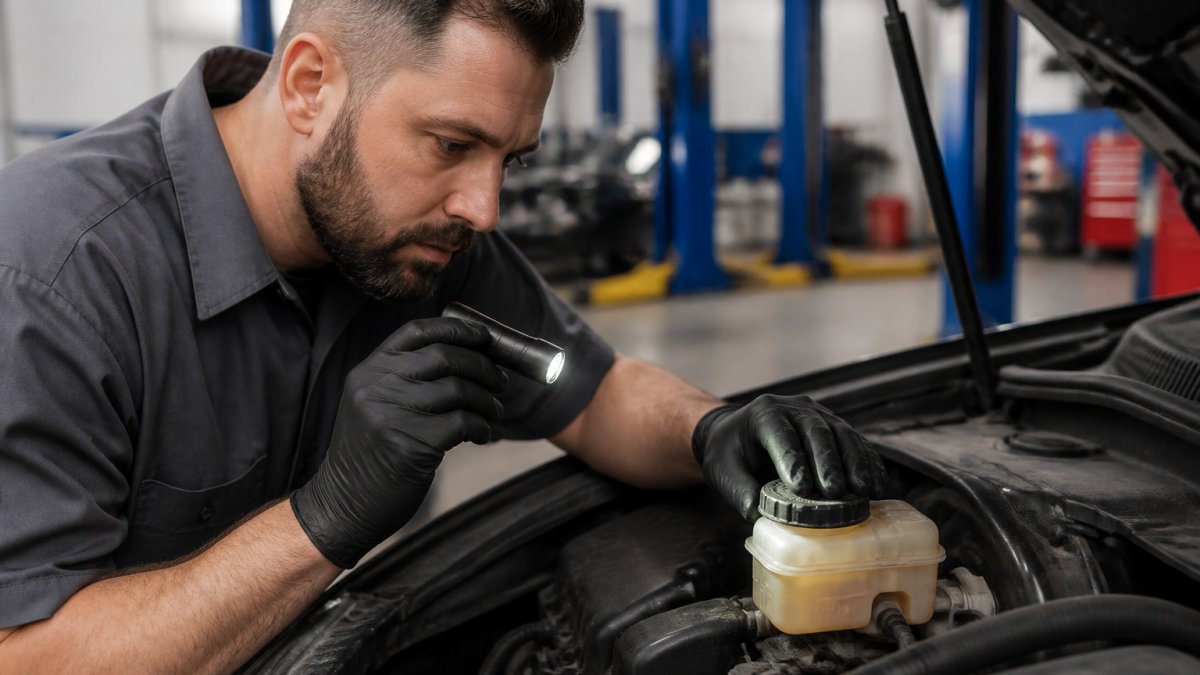
Visible discoloration in your brake fluid is a sign of age and contamination.
Corrosion or rust inside your brake components shows up during inspection. Contaminated fluid lets moisture corrode the master cylinder, calipers, and wheel cylinders, and once corrosion starts, replacement becomes necessary.
Is a Brake Fluid Flush Really Necessary?
The honest answer depends on your situation. A brake fluid flush is necessary when your fluid has degraded to the point where it no longer provides safe braking performance. It’s preventive maintenance when your fluid is still good but approaching the manufacturer’s recommended interval.
The real question is whether you flush on a schedule or wait for symptoms.
When a flush is essential
A brake fluid flush becomes non-negotiable in these situations:
Your vehicle has reached or exceeded the manufacturer’s recommended service interval. Continuing to drive with old fluid increases the risk of brake failure, especially in emergency braking or heavy use.
Your brake system is showing any of the warning signs listed above. Soft pedal, reduced stopping power, or visible fluid discoloration all indicate your fluid needs immediate replacement.
You’ve had brake work or repairs that opened your brake lines. Whenever a technician opens the hydraulic system, air enters the lines and must be bled out, often with fresh fluid added during the process.
Your vehicle is older and has never had a brake fluid flush. If your car is 5+ years old and you have no record of brake fluid service, a flush is overdue. Moisture accumulation over that time degrades the fluid significantly.
You drive in conditions that stress your brakes: frequent mountain driving, towing, heavy city traffic with constant braking. These generate more heat, which accelerates fluid degradation, so more frequent flushes make sense.
When you might delay it
If your vehicle is newer with records of recent brake fluid service, follow the manufacturer’s interval.
If there are no warning signs and you’re within the manufacturer’s interval, you can wait, there’s no benefit to flushing fluid that’s still performing well.
Conservative driving with minimal braking demands, light city driving, highway cruising, little mountain driving, degrades fluid more slowly.
However, don’t use this as an excuse to skip maintenance indefinitely. Moisture absorption happens over time regardless of driving conditions. Eventually, your fluid will need replacement.
Brake Fluid Flush vs. Brake Bleeding: What’s the Difference?
These terms are often confused, but they describe different procedures, and knowing which one you need is the difference between paying for the right service and paying for work your car didn’t require.
A brake fluid flush removes all old brake fluid and replaces it with fresh fluid. The technician connects a machine that pumps fresh fluid through your brake lines, pushing out the old contaminated fluid. It addresses fluid age, moisture content, and contamination.
Brake bleeding removes air from your brake lines. Air in the hydraulic system (usually from brake work) creates a compressible pocket that makes the pedal feel soft. Bleeding forces it out by opening bleeder valves on each wheel cylinder or caliper until no air bubbles remain.
A fluid top-up adds fluid to the reservoir to reach the correct level. It removes no old fluid, moisture, or air. A top-up suits a slightly low level with no leak, a persistently low reservoir usually means a leak that needs diagnosis.
Here is when each service is the right call:
- Flush: You are at or past the manufacturer’s interval, the fluid is dark or has tested high for moisture, or the system has never been serviced on an older vehicle. This is scheduled maintenance.
- Bleed: Air entered the system, after caliper, line, master cylinder, or ABS work, or after the reservoir ran dry. The symptom is a soft or spongy pedal, and bleeding is a repair, not maintenance.
- Top-up: The level is slightly low and there is no leak and no air. This is a stopgap, not a substitute for either service.
These procedures often happen together. After brake line work, a mechanic bleeds the system to remove air and may flush the fluid at the same time. That’s legitimate, but you should see both line items and understand why each was performed.
A flush does not fix a soft pedal caused by air in the lines, and bleeding does not restore fluid that has absorbed moisture. If a shop recommends one when your symptoms point to the other, ask what test or observation led to the recommendation.
A brake fluid flush replaces old fluid on a schedule. Bleeding removes air after repairs. A top-up only corrects level. Most vehicles need occasional flushing; bleeding is performed only when air enters the system. Ask which one your car actually needs, and why.
What a Brake Fluid Flush Costs and What to Expect
Brake fluid flush pricing varies based on your vehicle type, local labor rates, and whether additional brake work is needed. Rather than guessing at a price, contact 208 Tire & Auto Shop for a specific quote on your vehicle.
Still, know roughly what the service runs so you can tell a fair quote from an upsell. If a quote comes in far above what you expect without explanation, ask why.
What separates a fair price from a cheap one is scope. A proper flush is not a turkey-baster sip from the reservoir. Here is what a complete service should include, and what to verify on the invoice:
Inspection, Your technician checks fluid condition and color, looks for leaks or damaged lines, verifies the correct fluid specification, and notes the condition of the calipers, wheel cylinders, and master cylinder.
Fluid removal, Old fluid is extracted from the master cylinder reservoir before fresh fluid is introduced, so you are not pushing contaminated fluid back through the system.
System flush, Fresh fluid is pumped through the entire hydraulic circuit, lines, ABS modulator, calipers, and wheel cylinders, until clean fluid reaches every bleeder.
Bleeding, Air is purged from the system so the pedal comes back firm. On vehicles with ABS, this may require a scan tool to cycle the pump and valves; ask whether that is included.
Fluid level and leak check, The reservoir is set to the correct level, and the technician re-checks for weeping fittings or damaged bleeder screws.
Road test, Pedal feel and stopping performance are confirmed before the vehicle is returned.
The entire process typically takes 1 to 2 hours depending on your vehicle’s complexity.
Questions to ask your mechanic:
- What brake fluid specification does my vehicle require, DOT 3, DOT 4, DOT 5.1, or a manufacturer-specific spec?
- Will you test my fluid’s moisture content or condition before recommending a flush, and can you show me the result?
- Does the quoted price include ABS bleeding and a scan-tool procedure if my vehicle needs one?
- Are you replacing the fluid in the reservoir only, or flushing the full circuit at all four wheels?
- Did you find any leaks, seized bleeder screws, or corroded lines during inspection?
- What’s included, what’s extra, and do you warranty the work?
Ask for the out-the-door price before work begins, and ask whether the quote includes tax, shop supplies, and any scan-tool fees. A quote that grows after the car is on the lift is the most common source of brake-service complaints.
What Happens When You Skip This Service
Postponing brake fluid maintenance creates a cascade of problems that become increasingly expensive to fix.
Moisture accumulation, Over time, your brake fluid absorbs water from the air, lowering its boiling point.
Corrosion inside brake components, High-moisture fluid attacks the internal surfaces of your master cylinder, calipers, wheel cylinders, and brake lines.
Reduced braking performance, As fluid degrades, your braking response slows, the pedal feels softer, and stopping distances increase.
Brake component failure, Corroded calipers seize, wheel cylinders leak, master cylinders lose pressure. At this stage you’re not replacing fluid, you’re replacing expensive brake components.
Safety risk, Skipped brake maintenance puts you and your passengers at risk. Brake failure isn’t a minor inconvenience, it’s a safety emergency that can cause accidents, injuries, or worse.
The math is simple: a brake fluid flush every 2-3 years costs far less than replacing corroded brake components or recovering from brake failure.
Is a brake fluid flush really necessary? Yes, but the timing depends on your vehicle’s age, manufacturer recommendations, and current brake system condition.
At 208 Tire & Auto Shop, our ASE-certified technicians inspect your brake system thoroughly and recommend service only when it’s genuinely needed. We follow manufacturer specifications and stand behind our work.
Frequently Asked Questions
What happens if you never flush your brake fluid?
Over time, brake fluid absorbs moisture from the air, lowering its boiling point and reducing braking performance. Old, contaminated fluid can corrode internal brake components like the master cylinder and calipers, leading to soft brake pedal feel, longer stopping distances, and eventually brake failure. Delaying service turns a routine maintenance item into an expensive emergency repair.
How can you tell if brake fluid needs to be changed?
Check your brake fluid’s color and condition. Fresh fluid is clear to light amber; dark brown or black fluid signals contamination and moisture absorption. Signs include a soft or spongy brake pedal, longer stopping distances, brake warning lights on your dashboard, or visible corrosion around brake lines and calipers. A brake fluid tester can measure moisture content objectively if you’re unsure.
Is a brake fluid flush the same as bleeding the brakes?
No. Bleeding brakes removes air from the hydraulic system and is done after brake work or when you have a soft pedal. A brake fluid flush replaces all old fluid with fresh fluid to remove moisture and contaminants. Bleeding is a repair procedure; flushing is preventive maintenance. Some shops combine both during a complete brake service.
How often should brake fluid be changed according to manufacturers?
Most manufacturers recommend a brake fluid flush every 2 to 3 years or 20,000 to 30,000 miles, though some newer vehicles may go longer. Check your owner’s manual for your vehicle’s specific interval. Vehicles in humid climates may need more frequent service because brake fluid absorbs moisture faster. Following the factory-recommended interval keeps your braking system safe and prevents costly component wear.

