

Table of Contents
- What Is a Brake Caliper and Why It Matters
- How to Tell If a Brake Caliper Is Bad Without Removing It
- Common Signs of a Failing Brake Caliper
- Signs of a Sticking Brake Caliper
- Uneven Brake Pad Wear Causes and What It Means
- Distinguishing Caliper Issues from Rotor Problems
- Brake Caliper Replacement Cost and Your Options
- Preventative Maintenance to Extend Caliper Life
- Frequently Asked Questions
Last Updated: October 12, 2026
What Is a Brake Caliper and Why It Matters
A brake caliper is the component that squeezes your brake pads against the rotor to stop your vehicle.
When failing brake calipers occur, your braking distance increases, your vehicle may pull to one side, or you might lose braking power entirely.
Your brake system depends on the master cylinder, brake lines, brake fluid, rotors, pads, and calipers working together.
Most caliper problems show clear warning signs long before they become dangerous, so catching them early saves money and keeps your family safe.
How to Tell If a Brake Caliper Is Bad Without Removing It
You don’t need a lift or special tools to spot brake caliper trouble, just pay attention to how your brakes feel and sound during normal driving.
Listen for unusual noises:
- Grinding sounds when braking (metal on metal)
- High-pitched squealing (often a warning indicator)
- Clicking or clunking sounds during braking
Feel for brake pedal changes:
- Soft or spongy pedal that sinks toward the floor
- Pedal that requires more pressure than usual
- Pedal that feels unresponsive or delayed
Watch for pulling or drift:
- Vehicle pulls hard to one side when braking
- Steering wheel jerks when you apply brakes
- Uneven braking force between front wheels
Check your wheels visually:
- Look for brake fluid dripping or pooling near the wheel
- Inspect brake dust patterns (uneven dust suggests uneven wear)
- Notice if one wheel appears hotter than others after driving
Smell the air after braking:
- Burning odor from the wheels (especially after highway driving)
- Acrid or chemical smell indicates overheating
If you notice any of these signs, bring your vehicle to 208 Tire & Auto Shop for a professional inspection. Our ASE-certified technicians can diagnose caliper issues quickly and accurately.
Common Signs of a Failing Brake Caliper
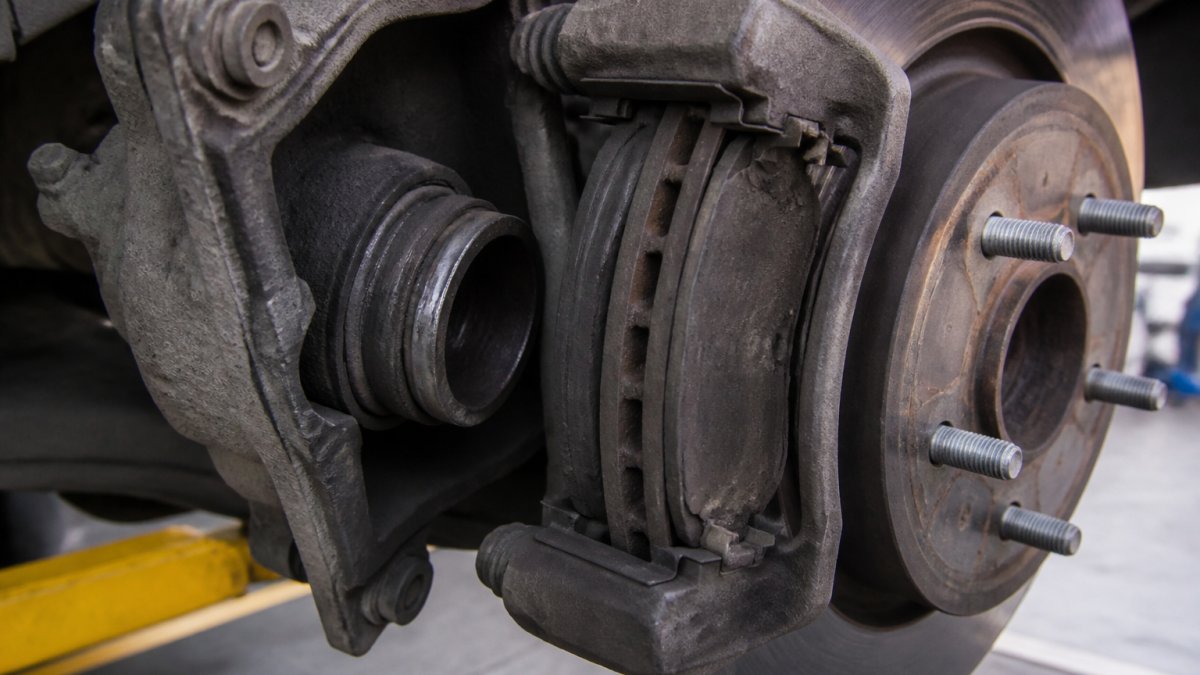
A failing brake caliper announces itself through warning signs that appear gradually or suddenly. The key is recognizing them before they compromise your safety.
Grinding and Squealing Noises
Grinding sounds mean metal is touching metal directly, usually because brake pads wore through to the backing plate, which then scrapes against the rotor. Grinding also occurs when a seized caliper piston locks in place, keeping the pad pressed against the rotor constantly and creating friction and heat.
Squealing is a high-pitched sound during braking that often comes from:
- Worn brake pad wear indicators (metal tabs that touch the rotor)
- Dust and debris between pads and rotor
- Caliper pistons that aren’t retracting fully
Squealing alone doesn’t always mean your caliper is failing, but combined with other signs it’s worth investigating.
If grinding sounds started suddenly and your brakes still feel normal, you might have debris stuck between the pads and rotor. But if grinding is accompanied by a soft pedal or pulling, get to a shop immediately, your caliper is likely seized or leaking.
Vehicle Pulling to One Side When Braking
When you brake and the vehicle pulls hard to one side, a caliper problem is a leading suspect because one caliper is applying more braking force than the other.
Why this occurs:
- One caliper piston is seized and stuck extended, keeping pressure on the pad
- One caliper has a leak, losing hydraulic pressure
- One caliper’s slide pins are stuck, preventing even pad contact
The pulling is most noticeable on smooth roads at highway speeds, and in an emergency stop it becomes dangerous because you lose directional control.
How to test for this:
- Find an empty parking lot or quiet road
- Brake firmly and smoothly (don’t lock up the wheels)
- Notice if the vehicle pulls left or right
Pulling during braking is different from pulling while driving straight (which usually indicates alignment or tire issues). Braking-only pulling almost always points to the brake system.
Never ignore pulling during braking. A seized caliper on the front wheel can cause you to lose control in an emergency stop, especially on wet roads or at highway speeds. Have this diagnosed immediately.
Soft or Spongy Brake Pedal
A soft brake pedal feels mushy and sinks toward the floor, sometimes requiring multiple pumps to build stopping power.
This symptom usually indicates:
- Air in the brake lines (most common cause)
- Brake fluid leak from a caliper or line
- Failing master cylinder (less common)
As fluid escapes through a leaking caliper seal, less hydraulic pressure reaches the other wheels, so your pedal travels farther before building pressure.
Key difference: If your pedal is soft but your brakes still work after multiple pumps, air is likely in the lines.
Burning Smell from the Wheels
A burning smell near the wheels after hard braking or highway driving signals excessive heat from friction, either normal braking or a seized caliper.
Normal brake smell: Light, almost metallic scent after hard braking that disappears quickly as brakes cool.
Abnormal brake smell: Strong, acrid, chemical-like odor that lingers even after brakes cool and may smell like burning rubber or hot plastic.
If you smell burning brakes, pull over safely and let your brakes cool for at least 15 minutes. Then drive carefully to a repair shop. Do not continue driving normally, you risk brake failure.
Visible Brake Fluid Leaks
Brake fluid is typically clear to amber colored. If you see fluid dripping or pooling near a wheel, your caliper likely has a leak.
Where to look:
- Inside the wheel (visible when looking through the wheel spokes)
- On the ground under the vehicle, near the wheel
- On the inner side of the wheel rim
As fluid escapes a leaking caliper seal, your brake system loses pressure, and eventually braking becomes impossible.
Don’t confuse brake fluid with:
- Condensation (water droplets, especially in humid climates)
- Power steering fluid (usually darker, oily smell)
- Transmission fluid (red color, different odor)
Brake fluid has a distinct chemical smell. It feels slippery and leaves a residue. If you’re unsure, bring your vehicle to 208 Tire & Auto Shop for inspection.
Signs of a Sticking Brake Caliper
Failing brake calipers that stick don’t release fully after you remove your foot from the brake pedal, so the piston stays partially extended and creates constant friction.
How to recognize a sticking caliper:
- One wheel is noticeably hotter than the others after driving
- Burning smell from one specific wheel
- Vehicle pulls slightly even when not braking (caused by drag)
A sticking caliper is often caused by:
- Corroded or stuck piston
- Damaged caliper seals
- Stuck slide pins (the bolts that allow the caliper to move)
Unlike a completely seized caliper, a sticking one still allows some braking, but it damages your rotors quickly and reduces fuel economy. The constant friction generates heat that can eventually cause brake fade, where brakes lose effectiveness due to overheating.
Uneven Brake Pad Wear Causes and What It Means
Brake pads should wear evenly across all four wheels. Uneven wear is a red flag that something in your brake system isn’t balanced.
Common uneven wear patterns:
| Wear Pattern | Likely Cause | What It Means |
|---|---|---|
| One pad much thinner than others on same wheel | Sticking or seized caliper | Caliper not releasing, dragging constantly |
| Inner pad worn more than outer pad | Caliper piston stuck extended | Piston not retracting fully |
| Outer pad worn more than inner pad | Caliper sliding incorrectly | Slide pins stuck or damaged |
| Front pads worn much faster than rear | Normal wear pattern | Front brakes do 60-70% of stopping work |
| One wheel’s pads worn much faster than others | Caliper issue on that wheel | Caliper dragging or seized on that side |
Uneven wear accelerates damage to your entire brake system: a worn pad exposes the metal backing plate, which grinds against the rotor and causes pulling and vibration. Our team at 208 Tire & Auto Shop checks pad wear as part of every brake service.
Distinguishing Caliper Issues from Rotor Problems
Brake calipers and rotors work together, so symptoms can overlap. But they’re different components with different failure modes.
Caliper problems typically cause:
- Pulling to one side during braking
- Soft or spongy pedal
- Grinding or squealing
Rotor problems typically cause:
- Vibration or pulsation in the pedal (feel through your foot)
- Vibration in the steering wheel during braking
- Noise that changes with wheel speed
Key difference: A failing caliper affects braking force and control, while a failing rotor causes vibration and noise but usually doesn’t affect stopping power as severely.
However, a seized caliper damages the rotor over time, so you might have both problems. At 208 Tire & Auto Shop, we inspect both components together, and fixing the caliper often prevents rotor damage from worsening.
When to replace just the caliper:
- Caliper is leaking but rotor is smooth
- Caliper is seized but rotor has no scoring
- Piston won’t retract but rotor surface is even
When to replace both:
- Caliper leaked and damaged the rotor surface
- Seized caliper created deep scoring on rotor
- Both show signs of wear and damage
Brake Caliper Replacement Cost and Your Options
Brake caliper replacement isn’t cheap, but ignoring a failing caliper costs more.
What affects replacement cost:
- Vehicle make and model (luxury vehicles cost more)
- Whether one or both calipers need replacement
- Rotor condition (damaged rotors require replacement too)
Your repair options:
New OEM calipers are built to exact factory specifications, reliable and fully warrantied. They cost more upfront but last longer.
Remanufactured calipers are used calipers that have been rebuilt and tested.
Rebuilt calipers are your cheapest option: a shop rebuilds your existing caliper by replacing seals and pistons.
Budget-conscious drivers with seized calipers but no rotor damage should consider rebuilt calipers. Families with newer vehicles should choose new OEM calipers for reliability and warranty peace of mind.
At 208 Tire & Auto Shop, we help you choose the right option for your budget, offer financing through several partners, and ensure quality work regardless of which option you select.
Preventative Maintenance to Extend Caliper Life
The best brake caliper is one that never fails. Preventative maintenance catches problems early and extends component life.
Regular brake inspections:
- Have brakes inspected annually (more often if you drive in stop-and-go traffic)
- Check pad thickness during tire rotations
- Listen for unusual noises during normal driving
Brake fluid maintenance:
- Brake fluid absorbs moisture over time (Brake Fluids with Low Moisture Avidity)
- Contaminated fluid reduces caliper performance
- Have fluid flushed every 2-3 years (check your owner’s manual)
Caliper slide pin care:
- Slide pins should move freely
- Corrosion or dirt causes them to stick
- Have pins cleaned and lubricated during brake service
Driving habits that extend caliper life:
- Avoid riding the brakes on long downhill stretches
- Use lower gears to control speed instead of constant braking
- Brake smoothly and gradually (not sudden hard stops)
Signs your calipers are still healthy:
- Smooth, responsive brake pedal
- Quiet braking (no grinding or squealing)
- Even pad wear across all wheels
Preventative maintenance costs far less than emergency repairs. A brake inspection at 208 Tire & Auto Shop catches sticking calipers, worn pads, and fluid issues before they become dangerous.
Frequently Asked Questions
What are the most common signs of a failing brake caliper?
The most common signs include grinding or squealing noises when braking, your vehicle pulling to one side, a soft or spongy brake pedal, a burning smell from the wheels, and uneven brake pad wear. You may also notice brake fluid leaks near the wheel or reduced stopping power. If you experience any of these symptoms, have your brakes inspected by an ASE-certified technician right away to ensure your safety.
Can you tell if a brake caliper is bad without removing it?
Yes. Look for visual signs like brake fluid leaks around the wheel, excessive brake dust buildup, or a wheel that feels hot after driving. Listen for grinding or squealing sounds during braking, and pay attention to how your vehicle handles, pulling to one side is a strong indicator. Check your brake pad wear through the wheel spokes if possible. These external clues often point to caliper problems without needing to remove components.
What causes uneven brake pad wear?
Uneven brake pad wear typically results from a sticking or seized caliper, misaligned brake components, or hydraulic pressure issues. When a caliper doesn’t release properly, one pad wears faster than the other. Worn suspension components, bent rotors, or problems with the master cylinder can also cause uneven wear. A professional inspection can pinpoint the exact cause and prevent further damage to your braking system.
Is it safe to drive with a failing brake caliper?
No. A failing caliper compromises your stopping ability and increases your risk of accidents. Reduced braking power, longer stopping distances, and loss of control are serious safety hazards. If you suspect caliper failure, avoid highway driving and get to a repair shop immediately. Continuing to drive on a failing caliper can damage your rotors and other brake components, making repairs more expensive.
Don’t wait for brake failure to get your calipers checked. Failing brake calipers compromise your safety and your family’s safety. Schedule a brake inspection with 208 Tire & Auto Shop today. Our ASE-certified technicians diagnose caliper problems accurately and repair them reliably. We offer flexible financing and competitive pricing on all brake work. Get your brakes inspected and drive with confidence.

