

Table of Contents
- What You Should Expect to Pay for Four Good Tires
- Average Cost of Four New Tires by Quality Tier
- Tire Size and Speed Rating: How These Drive Your Price
- Cost to Install Four Tires and Related Services
- What Counts as a Good Tire
- How to Compare Tire Prices and Avoid Unnecessary Add-Ons
- Tire Type, Vehicle Compatibility, and Cost Variations
- Factors That Affect Tire Prices
- Frequently Asked Questions
Last Updated: October 16, 2026
What You Should Expect to Pay for Four Good Tires
When you’re shopping for new tires, the first question is straightforward: how much should 4 good tires cost? The answer depends on several factors, but understanding the basics helps you avoid overpaying or settling for subpar quality.
At 208 Tire & Auto Shop, we help customers navigate tire pricing and find the right balance between quality and value. The cost of four new tires typically ranges based on tire quality tier, vehicle type, and tire size, a significant investment in your vehicle’s safety and performance.
The key insight most people miss is that the cheapest option isn’t always the best value. A tire that costs less upfront might wear out faster, handle worse in wet conditions, or deliver poor fuel efficiency, adding to your total cost of ownership. Premium tires often justify their higher price through longer tread life and better performance.
Average Cost of Four New Tires by Quality Tier
The cost of a complete set of four tires breaks down into three main quality categories, each serving different driving needs and budgets.
Budget tires are the most affordable option, designed for drivers prioritizing cost savings. They offer basic performance and adequate tread life for everyday driving. Many still meet safety standards, but they may not perform as well in extreme weather or match higher-tier comfort and handling.
Mid-range tires represent the sweet spot for most drivers.
Premium tires offer the highest performance, longest tread life warranties, and advanced features like enhanced fuel efficiency and superior handling. They use higher-quality rubber compounds and construction, translating to better durability in challenging conditions, and often come with comprehensive warranties covering tread life and defects.
The total cost difference between these tiers can be substantial: budget options are the lowest investment, while premium tires cost significantly more per set. However, calculating cost per mile over the tire’s usable life often shows mid-range and premium options deliver better value than the cheapest alternatives.
Tire Size and Speed Rating: How These Drive Your Price
Two technical specifications have outsized impact on tire pricing: tire size and speed rating.
Tire size directly affects cost because larger tires require more material and are designed for larger vehicles. A sedan wearing 215/55R17 tires costs less than an SUV wearing 265/70R17 tires, even at the same quality tier. Vehicle fitment matters, you can’t choose a cheaper size and expect the same performance or safety.
Speed rating indicates the maximum speed a tire can safely maintain for extended periods. Higher-speed tires (H, V, W, Y ratings) use more advanced materials and construction, increasing cost. A tire rated for a higher speed typically costs more than one rated for a lower speed, even if otherwise identical.
Load rating works similarly, indicating how much weight a tire can safely carry. Trucks and vehicles towing heavy loads require higher load ratings, which adds to cost. Matching the correct load rating prevents safety issues and ensures you’re not overpaying for unused capacity.
The combination of size, speed rating, and load rating creates significant price variation. Two tires from the same manufacturer and quality tier can differ substantially in price based on these specifications alone.
Cost to Install Four Tires and Related Services
The price you pay for four tires is only part of the total cost. Professional installation and related services add to your final bill but are essential for safe, proper tire function.
Mounting and balancing
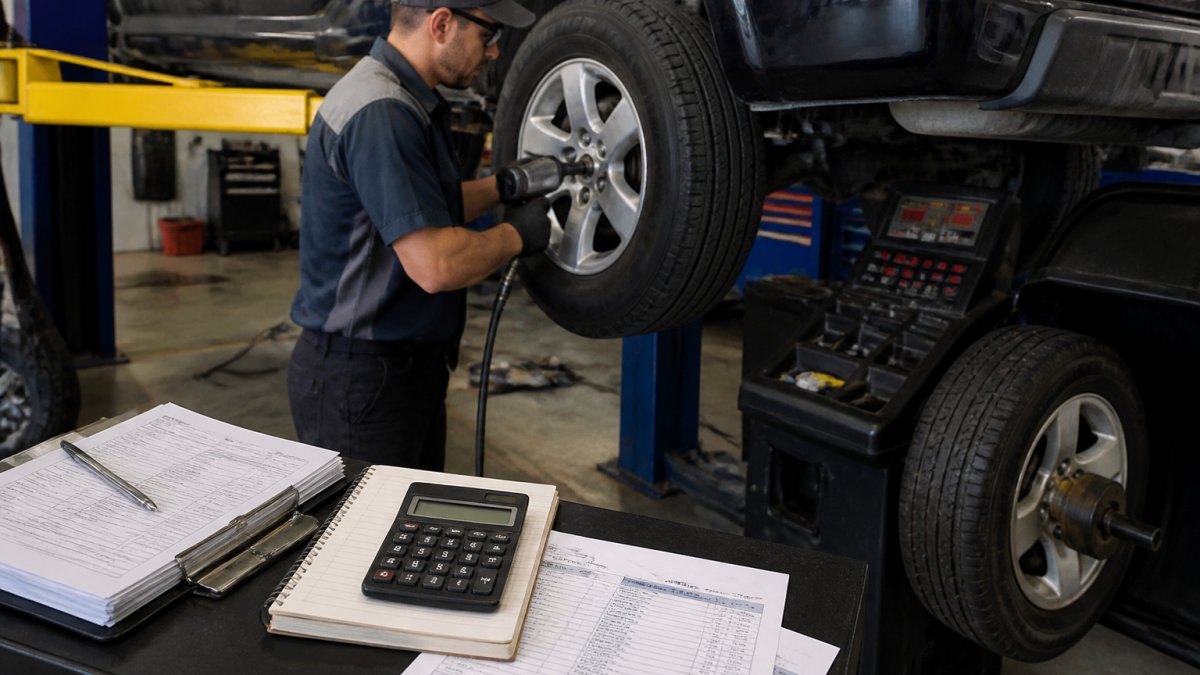
Mounting fits a tire onto a wheel rim, while balancing ensures it rotates evenly without vibration. Both are typically bundled as standard installation. Proper mounting requires specialized equipment to seat the tire bead correctly; balancing uses a computerized machine to identify weight imbalances and correct them with small weights.
Both services are critical for tire longevity and safety. Improper mounting can damage the tire bead or cause leaks, while unbalanced tires create vibration that accelerates wear, reduces fuel efficiency, and makes for an uncomfortable ride. Many shops include mounting and balancing in installation, though some charge separately.
TPMS service and valve stems
TPMS stands for Tire Pressure Monitoring System, the electronic sensors in your wheels that alert you when tire pressure drops. When you replace tires, TPMS sensors may need service or replacement depending on age and condition; some last as long as the tires, others need replacement sooner.
Valve stems, the small components through which you add air, should be replaced during installation. Old valve stems can develop leaks or fail, causing slow pressure loss. New ones are inexpensive but prevent headaches down the road.
TPMS service costs vary depending on whether sensors are reused or replaced. Many shops include basic TPMS service with tire installation, though sensor replacement carries an additional charge if needed. Independent shops often provide these necessary maintenance tasks at a fraction of the price, making avoiding dealership repair costs a practical strategy for long-term vehicle ownership.
Tire disposal and shop fees
Old tires must be disposed of properly. Tire disposal fees cover recycling or proper waste handling. Most shops include this in their installation package, though it’s worth confirming upfront.
Shop fees or service charges may apply for labor and overhead, varying by shop and region. Some bundle fees into per-tire installation cost; others list them separately. Understanding what’s included prevents surprises at checkout.
What Counts as a Good Tire
A good tire balances several characteristics that matter for safety, performance, and value. Understanding these traits helps you evaluate whether a tire justifies its price.
Tread depth is the distance from the tire surface to the deepest grooves. New tires typically have a certain tread depth.
Treadwear warranty indicates how many miles a manufacturer expects a tire to last. A treadwear warranty indicates how many miles a manufacturer expects a tire to last.
Traction and wet braking performance determine how well a tire grips the road in wet conditions. Tires rated A for traction provide better wet braking than those rated C.
Fuel efficiency affects how much energy your vehicle needs to roll the tires. Low rolling resistance reduces fuel consumption, saving money over the tire’s life.
Road noise level indicates how much sound a tire generates at highway speeds. Premium and mid-range tires often feature noise-reducing designs, while budget tires may be louder.
A good tire combines adequate tread depth, reasonable treadwear warranty, acceptable traction ratings, and reasonable cost. It doesn’t need to be the most expensive option, it needs to match your driving patterns and priorities.
How to Compare Tire Prices and Avoid Unnecessary Add-Ons
Smart tire shopping means comparing total installed cost, not just per-tire price. Here’s how to evaluate quotes fairly.
First, confirm that quotes include the same services. One shop might quote $X per tire plus mounting, balancing, and disposal fees. Another might bundle these into a single price.
Second, verify that all quotes are for the same tire model and specification. A quote for a budget all-season tire differs from a quote for a premium all-season tire with the same tire size.
Third, ask what’s included in the installation price: wheel balancing? Valve stem replacement? TPMS sensor service? Some shops include these; others charge separately. Understanding inclusions prevents sticker shock at checkout.
Fourth, be cautious about unnecessary add-ons. Services like wheel alignment, tire rotation, or extended warranties may or may not be needed. Wheel alignment is essential if your vehicle pulls to one side or shows uneven tire wear, but it’s not necessary with every tire replacement.
Finally, factor in the shop’s reputation and service quality. The cheapest quote isn’t always the best value if the shop cuts corners or provides poor customer service.
Tire Type, Vehicle Compatibility, and Cost Variations
Different tire types serve different purposes, and vehicle compatibility directly affects pricing and performance.
All-season tires for sedans
All-season tires are the most common choice for passenger vehicles and sedans. They provide reasonable performance across seasons, though they’re not optimized for any single season. All-season tires typically cost less than specialized winter or summer tires because they use more versatile rubber compounds and tread designs.
For sedans, all-season tires offer a practical balance of cost, performance, and convenience. Drivers in regions with mild winters can use all-season tires year-round. Those in areas with heavy snow often switch to dedicated winter tires during cold months.
Winter and summer tires
Winter tires use rubber compounds that remain flexible in cold temperatures, providing better traction on snow and ice. Summer tires use harder compounds optimized for warm weather performance and fuel efficiency. Both specialized tire types cost more than all-season alternatives because they target specific performance characteristics.
Winter tires are essential in regions with significant snow and ice, where all-season tires lose traction in extreme cold. Summer tires benefit drivers in warm climates where all-season tires overheat or wear quickly. Drivers who switch between seasonal tires need two sets, increasing total tire investment but extending the life of each set.
Truck and SUV tires
Truck and SUV tires typically cost more than sedan tires because these vehicles wear larger tire sizes and carry heavier loads. A truck tire in size 265/70R17 costs more than a sedan tire in size 215/55R17, even from the same manufacturer and quality tier.
Truck owners often face additional choices: all-terrain tires for off-road capability, highway tires for towing and hauling, or all-season tires for everyday use. All-terrain tires cost more than highway tires but sacrifice fuel efficiency and road noise performance for improved off-road traction.
Factors That Affect Tire Prices
Understanding what drives tire costs helps you evaluate whether a price is fair.
Tire size is the primary cost driver. Larger tires require more material and manufacturing complexity, increasing their base cost.
Brand reputation and warranty coverage influence pricing. Established tire manufacturers with strong reputations and comprehensive warranties charge premium prices because buyers trust their products and know they’ll be backed by the company.
Tread life warranty reflects the manufacturer’s confidence in durability. Tires backed by longer tread life warranties often cost more because they use higher-quality materials and construction methods.
Seasonal demand affects tire prices. Winter tire demand spikes in fall, often driving prices up. All-season tires see steady demand year-round. Off-season purchases sometimes offer better pricing, though availability may be limited.
Retailer markup and location play a role. Local shops like 208 Tire & Auto Shop provide personalized service, expert installation, and convenience.
Promotional pricing and sales events create temporary price reductions. Many tire shops run seasonal promotions or bundle deals that lower effective tire cost. Timing your purchase around these events can yield savings.
Finding the right tires at a fair price requires balancing quality, performance, and budget.
Frequently Asked Questions
How much are four car tires on average?
The total cost for four good new tires depends on tire quality, vehicle type, and tire size. Budget tires run lower, mid-range tires cost more, and premium or specialty tires (winter, performance, truck) push costs higher. Installation, balancing, and disposal fees also contribute to the final bill. For an accurate estimate for your specific vehicle, contact a local shop for a quote.
What affects the cost of four new tires?
Tire price depends on brand reputation, tread life warranty (measured in mileage), tire type (all-season, winter, summer, performance), vehicle compatibility, tire size, speed rating, and load rating. Larger vehicles like trucks and SUVs need bigger, heavier-duty tires that cost more. Seasonal tires and premium brands command higher prices. Installation costs, wheel balancing, TPMS service, and disposal fees also vary by shop and location.
How can I compare tire quotes accurately?
Request quotes from multiple shops for the exact same tire model and size. Confirm the quote includes mounting, balancing, TPMS service, valve stems, and disposal fees. Compare the total out-the-door cost, not just the per-tire price. Check warranty coverage, treadwear ratings, and customer reviews. Ask about any seasonal discounts or financing options. Ensure all quotes cover the same services so you’re comparing apples to apples.
Should I replace all four tires at the same time?
Yes, replacing all four tires together is recommended for safety and performance, especially for all-wheel-drive vehicles. Mismatched tread depths can affect handling, traction, and brake balance. If only one or two tires are damaged, some shops can replace just those, but for best results and peace of mind, four new tires ensure uniform grip, wet braking, and road noise levels. Your technician can advise based on your vehicle’s condition.

